
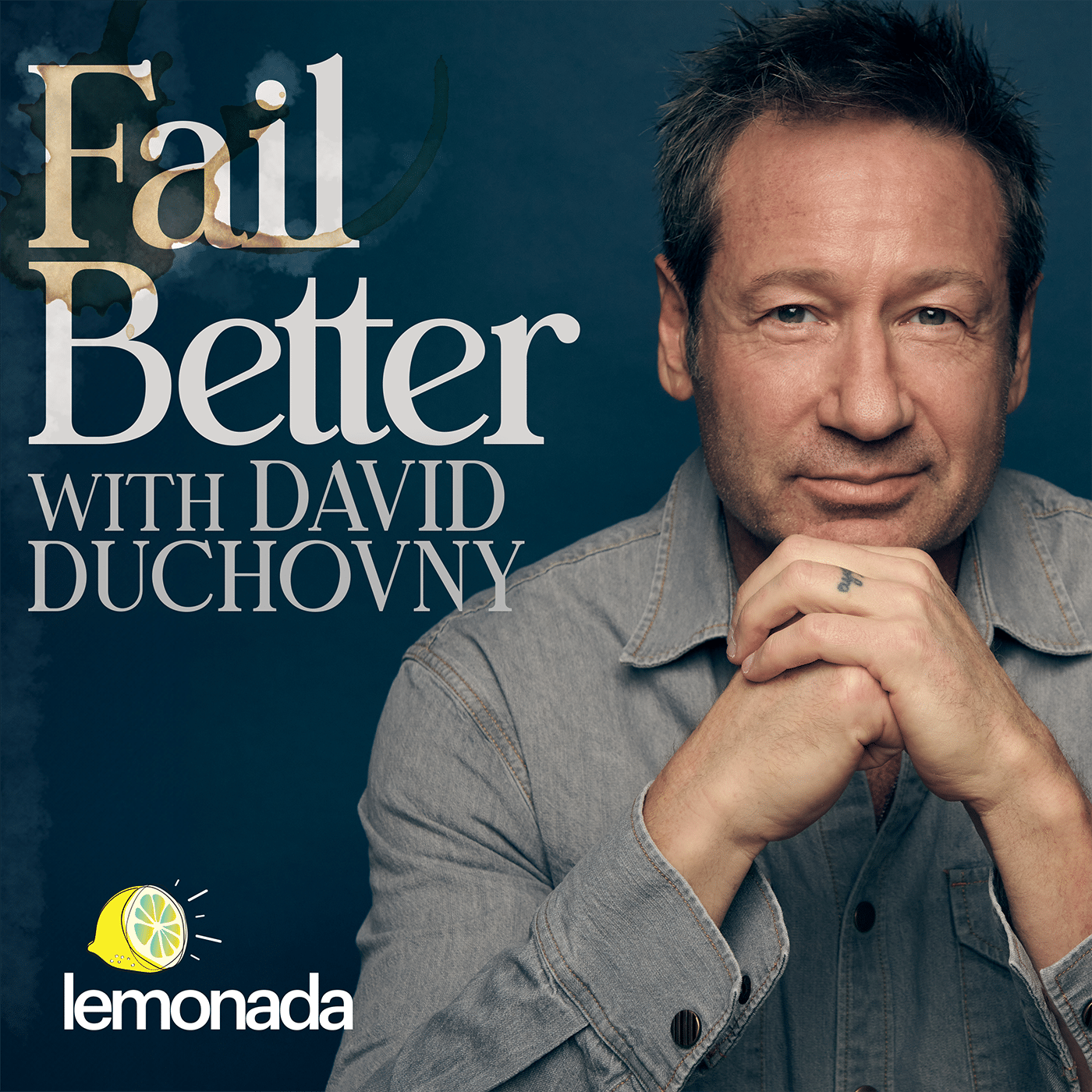
A Forensic Analysis with Emily Deschanel
Subscribe to Lemonada Premium for Bonus Content
Emily Deschanel spent over a decade portraying the brilliant and meticulous forensic anthropologist Dr. Temperance Brennan on the hit crime procedural Bones. Yet, what many viewers never knew about was her personal battle behind that confident performance: diagnosed with ADHD and dyslexia at a young age, Emily often struggled to master the intricate anatomical jargon week after week. Pushing through panic attacks on set and challenging moments with showrunner Hart Hanson, Emily persevered, going on to carry one of television’s longest-running dramas. We look back at her career and unpack the very real demands of balancing constant filming with mental health, as well as raising a family, and we get into my experience directing her on Bones. I even toss my notecards aside to try to solve the true mystery of an authentic conversation.
Fail Better is now on YouTube! Watch this episode here.
You can watch and listen to Emily Deschanel and Carla Gallo rewatch and revisit episodes of Bones and interview past cast and crew members on Boneheads.
Follow me on Instagram at @davidduchovny. Find more video podcasts on our YouTube channel. Stay up to date with Lemonada on X, Facebook and Instagram at @LemonadaMedia.
Joining Lemonada Premium is a great way to support our shows and get bonus content. Subscribe today on Apple Podcasts, Spotify, or wherever you get your podcasts.
For a list of current sponsors and discount codes for this and every other Lemonada show, go to lemonadamedia.com/sponsors.
Transcript
SPEAKERS
Emily Deschanel, David Duchovny
David Duchovny 00:00
I’m David Duchovny and this is Fail Better – a show where failure, not success, shapes who we are. Emily Deschanel is anactor who spent more than a decade of her life playing the brilliant and blunt Doctor Temperance Brennan on the hitFox series “Bones”. The show was one of the most widely recognized crime dramas of all time, and remains a popular comfort watch today. Emily currently co-hosts a re-watch podcast called Boneheads. The critically acclaimed show is loosely based on the novels and career of forensic anthropologist and author Kathy Reichs. It’s often credited for helping inspire women to pursue STEM careers, which was rare to see on TV at the time. Emily grew up a theater kid in a family full of stars. I remember working with her dad, Caleb, who was a highly respected cinematographer, but I worked with him as a director on Twin Peaks, one of my very first projects that I did. We talk about the success of a 12 season run, plus how she advocated for herself and navigated parenting through it. Here’s our conversation.
David Duchovny 01:13
When were you diagnosed with ADHD and dyslexia?
Emily Deschanel 01:17
I think I was 11.
David Duchovny 01:20
That’s young.
Emily Deschanel 01:21
Yeah. I think a lot of people my age did not get diagnosed, especially girls.
David Duchovny 01:27
Sure.
Emily Deschanel 01:28
Did not get diagnosed. Anyways, we don’t need to talk about that.
David Duchovny 01:32
No, we do. This is very interesting. My mother was a first grade teacher, second grade teacher. My sister is a grade school teacher. I come from a family of people that taught younger people how to read.
Emily Deschanel 01:40
Yeah.
David Duchovny 01:41
My mother began teaching in like 1975/76 around then. That was before, I think they knew what dyslexia was.
Emily Deschanel 01:53
Yeah.
David Duchovny 01:53
It was before. It was frequently diagnosed. Usually kids would get left behind if they were dyslexic, because they just didn’t seem to be keeping up with the other students. But, my mother was a big champion of kids who had trouble learning to read. She would come up with all different kinds of schemes to reach different kids, because not everybody learns the same way. Was that her experience?
Emily Deschanel 02:14
Yeah. I went to a million different schools, even in Los Angeles.
David Duchovny 02:18
Seems like an exaggeration to me. I just have to say.
Emily Deschanel 02:23
Every day, I would change halfway through. I went to a different school. I drive to another town everyday. No, it was probably seven or something. Six for elementary.
David Duchovny 02:35
This was all in L.A?
Emily Deschanel 02:36
No. I was a San Francisco L.A, off the coast of Africa and the Seychelles, then in London.
David Duchovny 02:43
Is that because your dad was shooting from that area?
Emily Deschanel 02:45
Yeah. I think is also you don’t have the consistency of being at the same school where people realize you know something’s going on.
David Duchovny 02:53
They get to know you in depth.
Emily Deschanel 02:55
Yeah. I was halfway through some years. I probably in part because I was dealing with that. I went to a Catholic school. My mom took me out halfway through a year, it was kind of dramatic when you think back.
David Duchovny 03:11
Dramatic.
Emily Deschanel 03:11
Yeah. I think they were pretty strict, and they didn’t get me. My memory serves. It was the American School in London, I just met someone who went there. Lots of people, Kathleen Turner went there because I worked with her, and we realized we both went there. Great school in London, they realized. They had me tested, and then they had support for reading. I went to the special reading class.
David Duchovny 03:40
How does dyslexia appear to you?
Emily Deschanel 03:45
I might as fairly minor. I think my ADHD, I experience much more in my daily life now. I think the dyslexia, it takes me a lot longer to read things. I like listening to things on tape a lot of times, reading a book.
David Duchovny 04:03
You’re auditory processing.
Emily Deschanel 04:05
But, I’m not good with auditory. According to the testing, do not do well with auditory. But, I prefer it.
David Duchovny 04:14
I know that on Bones you had reams of technical dialogue, that must have been actually your nightmare come true?
Emily Deschanel 04:23
Yeah.
David Duchovny 04:24
When I think of you now as a reader and as somebody who’s trying to not put the fasare neck or whatever. These long words that could easily, because you don’t know them. Could easily flip letters around, it would sound exactly the same to you.
Emily Deschanel 04:40
Yeah. The first season was the most challenging to me. You’ve been on first seasons of shows, it’s insane already.
David Duchovny 04:52
Yeah.
Emily Deschanel 04:52
Once I figured out a system, they gave me someone to help me run lines.
David Duchovny 05:02
This is interesting, because I’m about to go do a couple jobs. I like to memorize my shit, way in advance then forget it.
Emily Deschanel 05:11
Yeah.
David Duchovny 05:12
If I can, that’s my ultimate. Intelligent. Impossible.
Emily Deschanel 05:17
You can’t do it.
David Duchovny 05:18
Impossible. The night before you’re getting the second salmon goldenrod revisions, and you’re like, “Holy shit, there’s a monologue here that explains the entire show”.
Emily Deschanel 05:26
Right. This is really important and gotta memorize it. We didn’t have late night, almost never on Bones. That was the agreement Hart Hampson. He’ll said, “We won’t give you something last minute, 24 hours”. You agree to not do that to us either. We won’t as actors come to them and say, “Hey, the scene isn’t working for me. Can you change something about it?”, so we kind of had a mutual agreement, which is kind of unheard of in TV.
David Duchovny 05:58
Yeah, that is unheard of.
Emily Deschanel 05:59
We didn’t have that, but I realized I had done jobs before, doing Bones where I would learn my lines in advance. I learned I had to learn them the day before. The last ones would go out of my mind, and I would learn the new lines.
David Duchovny 06:21
It’s very muscular at that point.
Emily Deschanel 06:22
Yeah.
David Duchovny 06:23
I think the brand just adapts to that kind of a thing. When I’m memorizing these things for jobs coming up, I never speakthe words out loud until I get to set.
Emily Deschanel 06:36
Well.
David Duchovny 06:36
I don’t learn them out loud. In fact, I don’t process them well as memory, if I speak them out loud.
Emily Deschanel 06:43
Yeah, I think David Boreanaz is probably like that, because he could look at a page and just be like. He also played a character when we were working together that very much didn’t have to say the words verbatim. My character spoke in a very specific way, and I had to say them exactly as written.
Emily Deschanel 06:43
Just blowing my mind.
David Duchovny 06:43
I just look at them.
David Duchovny 07:03
He was speaking science.
Emily Deschanel 07:05
I was speaking science. I also came from play, because I went to Conservatory where playwright is king. Were doing the line.
David Duchovny 07:14
Shakespeare.
Emily Deschanel 07:14
We’re doing Shakespeare. We’re doing Chekhov. We’re doing Ibsen. I would not ever asked to change especially playing Brennan, the lines were as written. But, David Boreanaz could just look and then do the scene. He spent time looking at it too. I don’t mean to minimize.
David Duchovny 07:33
I’m sure he looked at it at home beforehand.
Emily Deschanel 07:35
Absolutely. But I think in a pinch, he could do that where you’d look at it and be able to do the scene. I can’t imagine. Well, I guess also I’m thinking of, most of my career has been playing the scientists. I have to get my mouth around the words.
David Duchovny 07:49
Yes.
Emily Deschanel 07:49
If you have to say epiphyseal fusion or zygomatic arch.
David Duchovny 07:56
Saying that the other day.
Emily Deschanel 07:57
It just comes up in conversation, all the time. It just comes up so you have to get your mouth. I have to get my mouth around them. That’s shocking, that you don’t have to say them out loud.
David Duchovny 08:11
It’s weird. I’m trying to deal with it my entire career. When we were talking here beforehand, I want it to be rolling. That the first time. I always want the first time. I don’t even like to rehearse before we shoot a month ago.
Emily Deschanel 08:36
Yeah. Right.
David Duchovny 08:36
But when we’re here, I like to let the lightning in a bottle. Try to happen.
Emily Deschanel 08:42
I hear that.
David Duchovny 08:43
You can do that on film, because you can make a mistake. It’s okay. You can just go again. What I wanted to do?
Emily Deschanel 08:50
Yeah, your experiment or whatever you want. Oh no.
David Duchovny 08:52
It’s an experiment, because you’re an actor. Do you know the story when Marlon Brando did last time? Go in Paris, whenhe did his famous monologue. His wife has died.
Emily Deschanel 09:07
Right.
David Duchovny 09:07
He’s found out that she’s been having an affair with the landlord, and he’s heartbroken because she’s dead. He’s heartbroken because she’d been unfaithful in him. He does this incredibly interesting monologue to her corpse. The actress is lying.
Emily Deschanel 09:21
Right. I’m trying to remember […].
David Duchovny 09:23
You don’t have to it.
Emily Deschanel 09:25
But, I saw it. It was a very long time ago.
David Duchovny 09:28
Yeah, not when you were a kid. You didn’t see this when you were a kid. I’m hoping.
Emily Deschanel 09:31
Maybe teenager.
David Duchovny 09:34
Bertolucci, who I believe is the director. He had this long wonder shot that he wanted to do with in. Bernando apparently showed up, not exactly word perfect.
Emily Deschanel 09:44
He would get the lines in it.
David Duchovny 09:46
Yeah, eventually.
Emily Deschanel 09:48
Yeah, this was younger.
David Duchovny 09:49
Here’s the genius of Bernando in this particular instance. Apparently could be an apocryphal story. He said, “Write my monologue on big cue cards, like Saturday Night Live”. He didn’t say Saturday Night Live because it didn’t exist yet, but he had his monologue written on cue cards. But, here’s the genius part of Bernando. He said, “Shuffle them and then place them around”, because he knew the order, more or less. He knew the sense of it.
Emily Deschanel 10:20
Right. Look over here.
David Duchovny 10:21
Just looks like he’s thinking. He’s like, “He’ll get through one bit, and then he’ll go”. There it is. Then he’d say that part.
Emily Deschanel 10:34
Does knowing this ruin that? Same for you?
David Duchovny 10:37
No, I like it even more. What I wanted to do was I wanted to take my notes.
Emily Deschanel 10:42
Oh, okay.
David Duchovny 10:43
I wanted to shuffle them first.
Emily Deschanel 10:45
And just put them wherever? Okay.
David Duchovny 10:47
Yeah.
Emily Deschanel 10:47
I was ready to be reading dialogue.
David Duchovny 10:49
Well, it could get there. What I wanted to do is give you these three cards.
Emily Deschanel 10:53
Okay, Are these my answers?
David Duchovny 10:55
Just write down one question per card. It has a prompt on one of them.
Emily Deschanel 11:00
Okay, wait. Do I read the prompt?
David Duchovny 11:04
Yeah. You can read the prompt to yourself or to me. What does it say? You can’t read my handwriting is the problem.
Emily Deschanel 11:10
I am at the age now where I have spaces to read.
David Duchovny 11:13
You need it. You know what? You don’t have to fix your eyes. You only have to lengthen your arms. It’s much easier.
Emily Deschanel 11:19
I’m at the point where I need to fix the eyes and lengthen the arms. Okay, we ask questions for you.
David Duchovny 11:27
No, just a question. You can ask a question to me if that’s what’s on your mind.
Emily Deschanel 11:28
Okay.
David Duchovny 11:29
Just a question. It could have to do with failure or not. I don’t mean to bring proceedings to a screeching halt here.
Emily Deschanel 11:46
That’s okay.
David Duchovny 11:50
Then we’re going to reshuffle everything. At times when I look down, maybe I’ll just look at.
Emily Deschanel 12:00
Okay.
David Duchovny 12:01
Here’s why. This is what I was thinking.
Emily Deschanel 12:06
I’m good with it.
David Duchovny 12:09
I’m a person that likes to do things well and I think that gets in my way sometimes.
Emily Deschanel 12:15
Yeah.
David Duchovny 12:16
I have these ideas that this podcast, any podcast or any discussion should have some kind of form. We’re talking about the song, it should go structure. I’m trying to let go of that a little bit. Again, saying earlier about rehearsal. It’s like, I’m trying to let a little magic, loss or in, or mistake.
Emily Deschanel 12:37
Yeah. I like it. I’m the same way/
David Duchovny 12:40
You are?
Emily Deschanel 12:45
Yes.
David Duchovny 12:45
You want to shuffle those index cards?
Emily Deschanel 12:48
I want things to be controlled. I guess that’s not exactly what you’re saying, you want is good.
David Duchovny 12:56
No, but control is part of that because I’m trying to control it into being good.
Emily Deschanel 13:01
Yeah.
David Duchovny 13:02
You know what I mean?
Emily Deschanel 13:02
Yeah, exactly. If I can just control, if I can just do this thing, if I can ask this question at this time.
David Duchovny 13:09
Exactly.
Emily Deschanel 13:10
This conclusion, then it will be good.
David Duchovny 13:13
As I’ve been having discussions about success and failure, I realized that so much of my life and people’s lives is consumed with getting it right. Getting it right, that’s fine but getting it wrong can be so much more interesting. You know that as an actor, too.
David Duchovny 13:33
We’re not talking about you getting the scientific words wrong. That’s no good for anybody.
Emily Deschanel 13:33
Yeah.
Emily Deschanel 13:39
Right.
David Duchovny 13:39
But, you’ve been involved in scenes on sets where shit goes wrong and it’s the best stuff you’ve ever done.
Emily Deschanel 13:46
Yeah.
David Duchovny 13:47
You know so well.
Emily Deschanel 13:47
I don’t know about that, but I’ve definitely messed things up. I’ve definitely failed in different ways, or fall fallen short of the mark in so many ways.
David Duchovny 13:59
What is your response in those times? Is it to kind of retreat into the shell of control and go, “Okay this time, I fucked up. I’m gonna get it good this time”. In my experience, it kind of lets all this air into the room. All of a sudden everybody’s breathing deeper, “Okay, we’re all human. That was kind of cool”.
Emily Deschanel 14:23
Yeah.
David Duchovny 14:24
Now, it brings a different sense into the next take.
Emily Deschanel 14:28
I went to this conservatory for college. I had a teacher, Bill Young, and he’s my favorite teacher (my favorite acting teacher). His class was mostly in comedy. I had some monologue that I was doing. You just feel that it’s bad, you just like, “This is not good”. I don’t know how to make it good, but you still are kind of hoping that your professor is gonna like it. I finished it. He just said, “Well, that was shitty”, and I just loved him so much more in that moment, because it didfreed me up. The way he said it and the fact that he’s telling me made me think that he thought I could do better, but he’s acknowledging the fact that it was bad. We all know it was bad. If he told me it was good, I wouldn’t trust him either.
David Duchovny 15:21
Right.
Emily Deschanel 15:22
That to me, I just always remember that because it opened me up so much and you gave me freedom. But I will say thatI probably am guilty of then trying to muscle my way into making something good. If a scene goes badly, if an audition goes badly, something with my kids go badly. Like let me read more parenting books, and then I will be a better parent. Let me make sure that I’m meditating every day so I’m not gonna react. I definitely am the person that’s like trying to get. I want to muscle my way through, and I want to get as much outside input to make sure, instead of trusting myself. Idefinitely am guilty of that.
David Duchovny 16:09
Well, I don’t know about guilty. I don’t like that word there. How many parenting books have you read?
Emily Deschanel 16:18
I probably can’t count.
David Duchovny 16:19
Yeah, a million.
Emily Deschanel 16:19
One million, exactly the number of schools that we do.
David Duchovny 16:26
There’s that holy grail of the parenting book. Every two or three years, there’s, “Oh, everybody’s got to read this book”. And that’s the one that’s going to make your kids trauma proof, it’s supposed to be. There is going to be failure and tragedy in people’s live even my kids.
Emily Deschanel 16:45
I got to meet.
David Duchovny 16:49
Did you meet them?
Emily Deschanel 16:50
Yes.
David Duchovny 16:51
Oh, I shouldn’t have done that. That was bad.
Emily Deschanel 16:53
Why?
David Duchovny 16:53
I don’t know.
Emily Deschanel 16:54
That’s a failure.
David Duchovny 16:56
Never bring your children to set.
Emily Deschanel 16:59
They were really cute, I remember. Was one named, Kyd?
David Duchovny 16:59
Yeah.
Emily Deschanel 16:59
I remember being marveling at the fact that there’s a kid named Kyd, very cute. A good name. That was your son?
David Duchovny 17:11
He just graduated college.
Emily Deschanel 17:13
Oh, congratulations.
David Duchovny 17:15
Kyd Miller. My daughter is Madelaine West.
Emily Deschanel 17:19
Okay, right. West.
David Duchovny 17:21
West Miller. I always wanted to call him Kyd, but he still goes by Miller, maybe one day. Because Kyd the covenant is kind of a good handle.
Emily Deschanel 17:29
It’s a good name.
David Duchovny 17:30
Yeah.
Emily Deschanel 17:31
Sounds like a cowboy.
David Duchovny 17:32
How are you doing on those questions?
Emily Deschanel 17:34
Oh, I only put one down. Should I do it? We start talking.
David Duchovny 17:37
With the ADHD, can you talk?
Emily Deschanel 17:42
That’s the hard part. It doesn’t have to be about failure. It can just be about anything. I’ll have to answer?
David Duchovny 17:49
I don’t know.
Emily Deschanel 17:50
Okay, all right. Let me think.
David Duchovny 17:53
While you think. I’ll say that when I did direct you, I wish that after a take, I had said, “Well, that was shitty”. And knowing that’s your favorite kind of response,.
Emily Deschanel 18:05
That was my favorite.
David Duchovny 18:35
I brought this. Don’t look up yet, you’re writing. Where is this? I found this online.
Emily Deschanel 18:42
Oh my god. Well, now it’s just me.
David Duchovny 18:48
It looks like I’m restraining you. You look pissed off.
Emily Deschanel 18:54
That was my warming coat on set for so many.
David Duchovny 18:57
You look very skeptical. I don’t know if you’re getting that anywhere, but she looks very skeptical. Look like I’m restraining her over here for going after somebody.
Emily Deschanel 19:08
Well, that’s my go to look. I once did a film. I had a family. I was married, and I had three children. I was thinking thoughts in my mind as an actor, thinking like, “Oh, what a beautiful day”. I’m so grateful and lucky to have this family. My husband’s playing basketball.
David Duchovny 19:28
This is your character.
Emily Deschanel 19:29
This is my character’s mind, right? Those are my inner thoughts as the actor. The director, “What are you thinking about?”And I didn’t want to tell him, because I just felt personal and embarrassed. I don’t know. Well, what are you seeing?
David Duchovny 19:49
What do you see?
Emily Deschanel 19:50
He said, “You look sinister”.
David Duchovny 19:52
A sinister?
Emily Deschanel 19:54
I think because I have deep set eyes. I tend to furrow my brow. That’s my go to skepticism, sinister. You just getting that. It’s just my go to. It’s my resting skeptical, sinister face.
David Duchovny 20:11
Resting sinister face. I had an experience one of the first films I did. I can just shuffle. I think I almost got fired from it.
Emily Deschanel 20:24
A job?
David Duchovny 20:25
Moving, yeah. I know that they weren’t pleased with what I was doing. I think you have a story about that as well, thatfrom the first season of Bones, where you feel like, “They don’t like me”.
Emily Deschanel 20:43
There were several things that happened on Bones. First seasons are insane. We were working insane hours longer than just a normal series. You’re working 14 to 16 hour days, and then I had to memorize those lines. I’d be staying up late at night memorizing lines. I would joke that I would go home and just cry in a bathtub every night because I was just so overwhelmed. I’d come to set and I would be trying to remember the lines. I got no sleep, then trying to remember the lines that I had memorized the day before, and then I had them in my head. Couldn’t remember them. I’d be on set, andI’d look around, I’d see the whole crew looking at me. Waiting for me to know my lines, to say my lines, which is complicated dialogue. I would remember a friend who’s a crew member, I knew from other jobs. It’s told me that crews hate it when actors forget their lines, it’s such a pain.
David Duchovny 21:52
I do too.
Emily Deschanel 21:53
Yeah. I have a lot of compassion having helped done this myself, where I couldn’t be working harder to learn these things and still not being able to get it. But, I also think I can get annoyed.
David Duchovny 22:08
Crews hate it when actors haven’t memorized their lives.
Emily Deschanel 22:11
Yes.
David Duchovny 22:12
I think they can tell the difference between somebody who’s having a moment and somebody who hasn’t, given the respect.
Emily Deschanel 22:19
Yes.
David Duchovny 22:20
Of the other working people on the set, and have families they have to go back to. They’re not making magic, and they don’t give a fuck.
Emily Deschanel 22:27
Yeah, they’re here. They have a job. They’re working insane hours and my job is to know my lines and to know what I’m supposed to do in the scene. I look around, I’d see that, and then the room would start to close.
David Duchovny 22:39
Sure, tunnel vision.
Emily Deschanel 22:40
Yeah.
David Duchovny 22:40
Fight flight.
Emily Deschanel 22:42
I didn’t know I was having panic attacks, but I was basically having panic attacks at the time. This a lot keeping things on your shoulder. One time, Hart Hanson, who’s the creator of the show.
David Duchovny 22:57
A friend of mine.
Emily Deschanel 22:57
A friend of yours. Did you meet when you directed bones? Or do you know each other before?
David Duchovny 23:04
No, Hart lived up in Malibu, where I lived. I think I met him when I was getting coffee, and he had been a big fan of The X Files. He maybe wanted to write on that, but I’d never met him before that. I just loved him as a person. We were just talking, and then at one point he just said, “You want to come direct the show?” and I was like, “Yeah. Why not?”. I’ll come direct to show.
Emily Deschanel 23:35
You good at it too. […] very good at.
David Duchovny 23:37
You know why? I want to get back to your story. I was thinking, “Why I said yes”, because I never thought of myself as a director for hire.
Emily Deschanel 23:47
Right.
David Duchovny 23:48
I’ve directed stuff that I’m in. I’ve directed stuff that I’ve written, that’s stuff that I think of. I thought at that point, “Oh, how interesting to direct something. Just direct”.
Emily Deschanel 23:59
Right, just come in. It’s just all you have to do.
David Duchovny 24:03
I’m just working. Forgive me, it’s not coming from my heart.
Emily Deschanel 24:08
It’s not a passion.
David Duchovny 24:09
It’s not. I’m just gonna solve this little rubik’s cube here and walk away because in TV, the director has to walk away. Youget two or three days of cutting. Then Steve Beers recuts everything that you did. I had two or three days.
Emily Deschanel 24:29
Stephen Nathan, probably. Steve Beers was our line producer. Steven Nathan, probably.
David Duchovny 24:35
He was kind of post show runner.
Emily Deschanel 24:37
Yes, exactly.
David Duchovny 24:38
I’m sure he did a great job. But, you’re not attached to it, in a way. I had a really good time and that was a lesson to me. To try to go into every scene and just go, “How do I help these people be the best they can be? How do we make this scene the best it can be?”. But, not break anybody’s ass and try to go into overtime. Not like that at all.
Emily Deschanel 25:06
We’ve got multiple cranes. Yeah, exactly.
David Duchovny 25:11
I enjoyed it. This is going to sound like really wrong. I enjoyed not caring that much. Does that make any sense?
Emily Deschanel 25:19
No, it makes complete sense.
David Duchovny 25:21
Does that sound horrible?
Emily Deschanel 25:22
No. There’s a joy in putting all of everything and your passion into something, you’re never going to feel that way as a director coming in to a television show. If you are part of the process and you’re directing the show, that’s maybe different. But most TV directors, they come in really skillful at getting things done quickly, knowing how to work with actors. Honestly, did you get a lot of acting now. I don’t get a ton of acting notes from directors who come in, just in general as episodic directors.
David Duchovny 25:57
Well, this is interesting because it was a bit of a pet peeve of mine when I was doing The X Files, not so much the other shows that I’ve done. As with Bones, it’s episodic. Every episode is pretty high drama, it can be life and death. I would have directors, and sometimes the directors would come on and they’d know they had a great script. On The X Files, this could happen, like, “This is a great script”, and they really wanted to kill it.
Emily Deschanel 26:30
Yeah.
David Duchovny 26:31
They were dangerous.
Emily Deschanel 26:34
Yeah, right.
David Duchovny 26:35
Often they would say, “We’ve never seen Mulder like this before”, and I’d say, “Yeah”, but 10 other times we’ve seen Mulder like this before.
Emily Deschanel 26:51
A very special episode.
David Duchovny 26:53
Then there was stuff. We did an episode on the first season where the gist of it was Mulder, afraid of fire. He’s got to go into this building that’s on fire. There’s a guy who’s kind of making him think of fire, and really kryptonite, weakening him. I remember in the middle of the episode, I had this thought. I think I went up to Chris Carter, who wrote that episode, I believe. I said, “Didn’t Mulder and Scully watch a building burn down in the pilot?”. I think Mulder was fairly cool with it. It didn’t bother. I was this kind of stuff where you’re kind of the curator of the character and sometimes you have to go. I can’t actually do that.
Emily Deschanel 27:37
Yeah. What’s funny is, I had a similar situation where first season of Bones. I’m very cool with a snake that’s there, and then second season or third season, they have me terrified of snakes. But little me was like, “Well, they know that I was near a snake in episode 418, season one”. I just made that I was scared. In my mind, I made it that I was scared of small snakes, because the other ones are small snakes. I would absolutely go to the show.
David Duchovny 28:15
What’s the term for fear of snakes?
Emily Deschanel 28:17
I know coulrophobia is a fear of clowns.
David Duchovny 28:20
That’s different.
Emily Deschanel 28:21
That’s all I know.
David Duchovny 28:22
Clown snake or clown fish. What’s the fear of clown fish? My daughter has a fear of snakes. It’s real. It overcomes her.
Emily Deschanel 28:35
I’m not great with snakes.
David Duchovny 28:36
It’s the tiny ones.
Emily Deschanel 28:39
The tiny ones move quickly. I feel like the tiny ones are scarier than big one.
David Duchovny 28:45
They could be.
Emily Deschanel 28:46
I’m with Brennan […]. I’m in the trailer first season. I’m having panic attacks.
David Duchovny 28:54
What’s very interesting is you mentioned tunnel vision, because we talk about failure a lot on this podcast. We usually talk about things or experiences or events. But, there’s the physiological response to something that’s failing or something that’s going wrong.
Emily Deschanel 29:16
The panic of the shame
David Duchovny 29:19
Is a big deal.
Emily Deschanel 29:20
Yeah, it’s probably shame. I mean, the panic is part of the shame.
David Duchovny 29:25
I think the heart of what you’re saying is, “Oh, I’m exposed here”, because you mentioned the crew. They’re all seeing that I can’t do it. They’re all seeing that I’m bad. They’re all seeing that I didn’t work hard.
Emily Deschanel 29:39
My true self, if you will. My failing self that I can’t do it. It’s like imposter syndrome kind of thing. They all know that I’m just faking this. It’s very exposing and I think it is shame. I had been late. We were filming in Whittier, there was a terrible accident. I’ve been late. You don’t realize that the studio sees the production report, and all they see is Emily Deschanel or I have 30 minutes late.
David Duchovny 30:17
I never thought about that.
Emily Deschanel 30:19
You never think of it at all, ever?
David Duchovny 30:22
When I started directing, I was like, “Hell, these fuckers are late”.
Emily Deschanel 30:26
Right. No, I was very much aware. Maybe after this conversation that I had with Hart, I became very aware of they knowwhen I step into the hair makeup trailer. They know exactly what time. They know if I’ve caused it. They know if anyone’s caused it […]. Anyway, after this conversation was never related again, but Hart knocked on my trailer door, which was not a usual thing. He wasn’t knocking on my door, often.
David Duchovny 30:59
Except the cops.
Emily Deschanel 31:00
I thought it might be the cops, but the TV cops. I was gonna get arrested, basically was. He took me aside and said, “You know, the studio is concerned about your work”.
David Duchovny 31:13
What does that mean?
Emily Deschanel 31:14
They said that I was late and unprepared. To me, I get emotional just thinking about it now, because it probably a shame. It was like, “You are unprofessional”. It’s so funny. I literally just gave a speech, and I mentioned this speech. Whyis it like that? Sorry.
David Duchovny 31:34
No, don’t apologize.
Emily Deschanel 31:35
I’m a dramatic actor.
David Duchovny 31:37
No, what I think is if I could stop there for a moment is it’s your self respect. It’s like they’re saying you’re a bad person.
Emily Deschanel 31:53
Yeah.
David Duchovny 31:55
It’s not even about acting at that point. You don’t care about other people is what I’m hearing there. That’s not you so you’re being misunderstood.
Emily Deschanel 32:05
Yeah.
David Duchovny 32:07
And that hurts.
Emily Deschanel 32:11
I grew up, my dad had such a strong work ethic.
David Duchovny 32:16
Do you know your dad directed me?
Emily Deschanel 32:20
Twin Peaks?
David Duchovny 32:21
Yeah.
Emily Deschanel 32:22
I knew that years ago. I think when we work together, that’s so crazy. My dad directed you. You directed me. I have to direct one of your children. That how works? Are they actors?
David Duchovny 32:33
My daughter, yeah. You’ll have to direct my daughter.
Emily Deschanel 32:34
I would love to direct your daughter.
David Duchovny 32:35
That’s terrific.
Emily Deschanel 32:37
I’ve hardly directed.
David Duchovny 32:40
I think you should.
Emily Deschanel 32:41
I would love to, I just don’t have the opportunities to. That’s a whole other thing.
David Duchovny 32:47
We’ll get there, might be in the cards. Here is it in the cards?
Emily Deschanel 32:52
Literal guards […].
David Duchovny 32:55
Fractions off of his glasses,
Emily Deschanel 33:02
I was a wreck. My friend was visiting me at the time. She’s like, “I didn’t think human beings had projectile tears”.
David Duchovny 33:10
Oh right, yeah.
Emily Deschanel 33:13
I took it so hard. I was such a fragile person at the time. I got hardened up doing that show for so long. I was not sleeping. I was so stressed out. I’m an actor. I’m an emotional person, I was just beside myself. They took me aside and and said that, then the next day, we got picked up.
David Duchovny 33:46
Oh, really?
Emily Deschanel 33:47
For the back nine.
David Duchovny 33:49
Did Hart say, “Okay, now we’re in this process”. How do we address these issues without making you break down and feel miserable?
Emily Deschanel 34:01
He gave me support. That’s how I got someone to help me run the lines with me.
David Duchovny 34:06
There’s a practical.
Emily Deschanel 34:07
Yeah. Then they were like, “You need to go to your trailer”, because I would never go to my trailer, except unless I was changing.
David Duchovny 34:15
Love being in my trailer.
Emily Deschanel 34:16
I ended up loving it. They gave me a bigger trailer. I just had a small trailer when I first […].
David Duchovny 34:21
That’s why they want to be in it.
Emily Deschanel 34:23
David Boreanaz had a big trailer, and they was not in my contract, but they gave me a big trailer. There was no scenes Iwas not in that they weren’t filming on a double up day. You had double up days, I’m sure.
David Duchovny 34:37
I mean, two units?
Emily Deschanel 34:38
Yeah, exactly. Two units. I’d go to the next episode, and they’d film scenes that I wasn’t in. They’ve realized that they could write more scenes for other people. They did a lot of things to help me not be a nervous wreck.
David Duchovny 34:54
Once you got picked up and you’ve established the two main characters, then they could serve the kind of orbiting character.
Emily Deschanel 35:02
Yeah, and they’re so good. We had great actors. They realized how they could utilize them more. They also realized, youdon’t put eight people on a lab platform scene with eight pages.
David Duchovny 35:02
I remember trying to shoot one like that. I was like, “How are we going to shoot this?”.
Emily Deschanel 35:19
You are just season two.
David Duchovny 35:21
Let’s get a tight eight over here. Can you all just face the same direction?
Emily Deschanel 35:29
We definitely have late nights like that where directly, “I think you’re all just standing, looking at the body”, from this angle. It would be two in the morning and on the saturday.
David Duchovny 35:42
Yes.
Emily Deschanel 35:43
Eventually. The first episode after the pilot, I remember. The director wasn’t doing that extreme of a thing, but I think he just kind of said, “Okay, you can stand here. You can stand there”. Several of us had never done a series before where someone just tells you, “Okay, you stand there”, you get to a point where you’re like, “Tell me where to go, and I will do it”.
David Duchovny 36:07
I have make it work.
Emily Deschanel 36:08
I will tell you, but mostly I’ll just make it work. We were offended, basically. The director had told us where to stand, and then we realized, it was a gift that we were given.
David Duchovny 36:23
What I would try to do if I was faced with a scene where there were five people talking.
Emily Deschanel 36:29
Yeah, as a director?
David Duchovny 36:32
No, as an actor, I would say. I’m gonna go stand away from everybody.
Emily Deschanel 36:38
You get a single?
David Duchovny 36:39
Well, not just a single but just my coverage is done. I’m just gonna stand here and look everywhere.
Emily Deschanel 36:49
And you could be the corner of the water cooler.
David Duchovny 36:53
I think Mueller would go over there, and everybody else because he’s an outsider. Everybody else is over there.
Emily Deschanel 36:58
You justified it.
David Duchovny 36:59
I justified.
Emily Deschanel 37:00
Yeah.
David Duchovny 37:02
Hart kind of worked with you, so he kind of held your hand through that in a nice way. That’s good.
Emily Deschanel 37:09
Yeah. Hart helped me find ways to be better and get my job done in terms of learning my lines and remembering them. A lot of it was having downtime or having some scene that I’m not in. He’s just a good one. We were so lucky.
David Duchovny 37:32
He’s so good?
Emily Deschanel 37:33
Because he’s Canadian.
David Duchovny 37:34
Exactly.
David Duchovny 37:35
That’s the only reason. But it’s true.
Emily Deschanel 37:35
Yeah.
Emily Deschanel 37:36
I know.
David Duchovny 37:38
Was there ever any kind of a recurrence of that tunnely failing?
Emily Deschanel 37:44
Daily?
David Duchovny 37:45
Yeah, because it does kind of come back. You learn to the flare ups are smaller and smaller. Know that you’ve been through it, you’re like, “I can exist within this”.
Emily Deschanel 37:58
For me as an actor, I got smaller and smaller. For me now as a person, I feel like my anxiety now in the last six months has been insane so I can’t say that in my life.
David Duchovny 38:11
As a parent.
Emily Deschanel 38:14
Everything in my life. But yes, as a parent, I will wake up in the middle of the night.
David Duchovny 38:22
Give you the good news.
Emily Deschanel 38:23
Yeah.
David Duchovny 38:24
Never ends.
Emily Deschanel 38:28
Wait, do both of your children out of college?
David Duchovny 38:31
Just now.
Emily Deschanel 38:32
So long ago.
David Duchovny 38:34
I will continue to worry forever.
Emily Deschanel 38:37
No, I know the job never ends.
David Duchovny 38:40
They’re so meriting of worry, but as a mother, even more so I’m sure. You have two boys is that, right?
Emily Deschanel 38:50
Yeah, you did a research.
David Duchovny 38:51
It’s in here somewhere. How very interesting, because there’s a lot of focus these days on boys. Just recently, young men going off to do a movie that kind of attacks this. Every day, it seems there’s an article I’m reading, like, “What’s wrong with young men?”
Emily Deschanel 39:12
Yeah.
David Duchovny 39:14
I wonder, do you think about well as a woman. You’re raising boys, you’re married. Your husband involved, obviously.
Emily Deschanel 39:24
Yeah, very involved.
David Duchovny 39:25
Yes, very involved especially with boys, modeling. That aspect of manhood, whatever it is. But I do, have been struck justin the time that you’ve been raising these two boys of watching in the culture in general. If not a problem with boys, then a focus on what’s wrong with boys.
Emily Deschanel 39:48
Yeah, and it’s so funny that you mentioned that, having read so many parenting books. I have parenting books 1 million,as we know, but I have not read 1 million in one which are the ones about the boys. I do have books that are specifically about boys, and the articles (things like that), gives me anxiety. I’ve read a little bit, but I haven’t taken a deep dive there. I’m so glad. I wanted to have girls when I was younger, then I babysat for two boys. I just loved them. I am so gladI have boys. Somebody said to me, boys need their moms, but they hate that they need their moms. I find that to be very much like a thing in my relationship with my sons. There’s something that I can’t provide for them, that their dad provides for them.
David Duchovny 40:49
Absolutely.
Emily Deschanel 40:53
I was close to my mom growing up. I just think, kids are close to their moms and I’m more than my husband is. It fluctuates depending on what we’re each doing work wise, but sometimes they’ll run to him instead of me, that’s a hard thing for me.
David Duchovny 41:18
Is it?
Emily Deschanel 41:19
Yeah, it is. It was started with working so hard when they were really young that I missed first steps. I missed certain things.
David Duchovny 41:27
I wanted to ask about that. You gave birth to both boys.
Emily Deschanel 41:31
On the set of Bones.
David Duchovny 41:33
You did not, you just use that great set.
Emily Deschanel 41:37
I was working 12 hours before I went […], but I did not give birth.
David Duchovny 41:44
How did they shoot around that?
Emily Deschanel 41:48
My first son, I was due in the middle of the season. I asked for six weeks off and Hart show on her, who we talked about before. He Canadian, as you’ll see, he gave me 12 weeks off.
David Duchovny 42:04
So Canadian.
Emily Deschanel 42:06
So Canadian. He gave me actually time.
David Duchovny 42:08
That’s almost Scandinavia.
Emily Deschanel 42:11
No, Scandinavian would be a year for each parent maybe two years, I think. Paid recently for a year, I know. At least a year in Sweden, because I know some Swedes. I think I’d go a little bit crazy with a baby. I guess if both parents get that. I thought it would be lovely.
David Duchovny 42:33
Yeah. Wait, let me just imagine. I’m shooting you. You’re big, right?
Emily Deschanel 42:40
I was pregnant. My character was pregnant. I told Hart. I was like, “I’m not gonna be one of those tiny pregnant people”.You’re not gonna be able to hide.
David Duchovny 42:54
We’re shooting a pregnant the first season.
Emily Deschanel 42:55
The first season?
David Duchovny 42:56
Yeah. We didn’t shoot her for being pregnant.
Emily Deschanel 42:58
The first season is hard. We were in our sixth season maybe, something like that. Booth and Brennan are my character,and David Boreanaz character were not together. They decided to put us together. There was discussion whether I haveanother baby. I have a baby on my own.
David Duchovny 43:13
They put you together because you were pregnant? See, that’s interesting, it drives story.
Emily Deschanel 43:18
Yeah.
David Duchovny 43:19
Interesting to me.
Emily Deschanel 43:20
Yeah, it is interesting.
David Duchovny 43:21
What about your energy? That must be so hard.
Emily Deschanel 43:25
Yeah. First in both pregnancies, that’s to limit my hours to 12 hours a day. But when you think about that, that’s a long day. That’s limited for an actor, especially an actress.
David Duchovny 43:35
If you’re saying door to door 12.
Emily Deschanel 43:36
Not door to door, but arriving. I have hair and makeup for an hour before we start filming then you have an hour for lunch. I meant an hour from when I arrive which is a long day in every regard, but it’s a shorter day for TV series. I asked for that, but then I had some complications with my second pregnancy so I limit it to 10 hours. But I would go to my trailer and take a nap before I drove home, because I’d be too tired to drive home a lot of times.
David Duchovny 43:37
Is this your handwriting?
Emily Deschanel 43:37
Yeah.
David Duchovny 43:37
Okay, good. Your handwriting is good.
Emily Deschanel 43:37
It might be slightly better than yours. Not great.
David Duchovny 43:37
When was success a negative thing?
Emily Deschanel 43:45
I don’t know. That was a terrible question, I shouldn’t have asked.
David Duchovny 43:55
I can’t get rid of it.
Emily Deschanel 44:43
It’s a bad question.
David Duchovny 44:47
You don’t have to answer it.
Emily Deschanel 44:50
It’s a good general question. But, it’s on the spot like, “Say something funny”, and then you don’t know what your gonna say. I certainly it affected relationships. A boyfriend I had early on in Bones, I don’t think it was helpful.
David Duchovny 45:14
Really?
Emily Deschanel 45:14
Yeah.
David Duchovny 45:15
Your success?
Emily Deschanel 45:15
Yeah.
David Duchovny 45:16
You felt threatened by that? Or you were just so busy?
Emily Deschanel 45:19
Both. That’s me guessing about certain things. It was both. That guy in particular thought I was avoiding. I’m literally working non stop. When I’m not sleeping, I’m working. There’s just no time for me to see you like this. I’m not avoiding you. I am just trying to survive. That was one thing. That wasn’t meant to be anyway.
David Duchovny 45:51
What about within the family? Was there any ever sibling rivalry, or your mom’s an actress, your dad’s a director?
Emily Deschanel 46:02
I don’t think there’s any sibling rivalry. I don’t think my sister was ever envious of me being on Bones. I don’t think that was ever a thing. We’re pretty good. It’s kind of weird to both be actors. You have a sister? Do you have other siblings?
David Duchovny 46:22
I have an older brother and a younger sister, neither of them. None of the actors. I didn’t start acting when I was like, 26-27. I was getting all those advanced degrees.
Emily Deschanel 46:36
Overly educated. My sister and I are so different. I think twice we auditioned for the same work.
David Duchovny 46:51
Really?
Emily Deschanel 46:52
One time she got the part, and I was really loving that part. It was really good part, but she was the person right for thatpart. We’re different enough that we don’t really have that.
David Duchovny 47:12
Yeah, but you pull for each other?
Emily Deschanel 47:15
Yeah. I’m really so proud of her. When she started New Girl, too. I watched every episode of that show, hilarious. I visitedher on set and get teary eyed. So proud of her. She’s just so funny and good. She’d be improvising things. Anyway, I’d say pretty much.
David Duchovny 47:41
Okay. This is a card called stupid questions.
Emily Deschanel 47:45
Okay, I like stupid questions.
David Duchovny 47:47
Is it harder to get a fake honorary degree or real
Emily Deschanel 47:51
I think, it’s harde to get a real one, for sure.
David Duchovny 47:55
You don’t have to answer this one. This just makes me laugh. Is there failure?
Emily Deschanel 48:00
Is there a failure? Yeah. Are you positing the question of what we think of failure, actually a success.
David Duchovny 48:01
I don’t know. It’s a question.
Emily Deschanel 48:07
It’s just a process.
David Duchovny 48:11
It’s kind of a short circuiting kind of question.
Emily Deschanel 48:14
Yeah.
David Duchovny 48:16
What did you forget today?
Emily Deschanel 48:20
I’ll tell you, I didn’t charge my car. Well, no, that’s not true. I charged my car and I didn’t check it. I had to take my husband’s car and then charge it on the way. But in terms of what I forget, I was thinking, because I do have ADHD and I literally forget things all the time. I go to physical things that I forgot but it could mean, what did I forget to bring up today?
David Duchovny 48:47
Yeah. In my world, it’s too kind of self flagellating. But the idea is, there’s so many things I have to forget in order to just go on with my day, because there’s so much shit happening.
Emily Deschanel 49:03
Like forgiving? Forget and forgive.
David Duchovny 49:06
Forget that they’re putting this draconian bill through Congress right now.
Emily Deschanel 49:10
Oh yes, 100%.
David Duchovny 49:12
Everyday we wake up and we have to forget a number of things.
Emily Deschanel 49:17
Yes.
David Duchovny 49:17
In order to live our lives.
Emily Deschanel 49:19
Yes. Sometimes it feels like even more and more these days.
David Duchovny 49:22
Well, you were talking about your anxiety. It was growing in the last six months, it’s been that way. It can be mean that as well. I find it an interesting question to ask myself, because we all have to be callous in a certain way. We can’t have compassion for the world every moment of our lives, it’s paralyzing.
Emily Deschanel 49:48
Yeah, it can be overwhelming. I think having children, it actually can be helpful to me, because you have to go on. You have to make sure that your kids know, “Hey, all these things in the world are happening, but we’re going to be okay”.
David Duchovny 50:04
Right. They have their childhood which is not involved in the budget and anything like that nor should it be.
Emily Deschanel 50:11
Yeah.
David Duchovny 50:12
It’s in a way, as much pain as those activities are bringing the world in general. They’re not the reality of being a child.
Emily Deschanel 50:23
Yeah, I think my kids are probably growing up faster than they should.
David Duchovny 50:28
Well, that’s the phone stuff.
Emily Deschanel 50:31
They don’t have phones.
David Duchovny 50:32
They will.
Emily Deschanel 50:33
Yeah, eventually.
David Duchovny 50:34
They have John Wick on their phone before you know it. This is your handwriting. What have you learned from failure? What have I learned from failure? What have you learned?
Emily Deschanel 50:48
Sure. What have you learned from failure? I mean, I don’t know.
David Duchovny 50:51
What I like to think I learned is humility, vulnerability, enthusiasm that you can go on. Accountability, all the good thingsnothing from success. Success you learn arrogance, complacency, paranoia (don’t lose this thing).
Emily Deschanel 51:13
Yeah.
David Duchovny 51:13
But failure, I think it grows your brain whereas success probably shrinks it.
Emily Deschanel 51:22
Yeah, I think that’s true.
David Duchovny 51:24
I’m not a doctor. Oh, honorary doctorate, perfect. Honorary doctorate. People consider you an expert. At what do they consider you an expert? I read that people consider you an expert.
Emily Deschanel 51:38
What? Maybe they think I’m an expert on Bones because of Bones.
David Duchovny 51:41
Yeah.
Emily Deschanel 51:42
I’m not an expert on Bones.
David Duchovny 51:44
Did you ever take the gruesome work home with you? Was it weird to be hugely pregnant and looking at this gruesome stuff?
Emily Deschanel 51:52
Early on, before I was ever pregnant. I feel like it took a toll a bit dealing with death and murder.
David Duchovny 52:02
It did?
Emily Deschanel 52:03
Yeah. Even a light hearted show, our show was never too dark. It was never dark, but dealing with murder, even fake murder.
David Duchovny 52:18
I never took that stuff home.
Emily Deschanel 52:20
Oh, you’re good.
Emily Deschanel 52:21
I have learned how to juggle.
David Duchovny 52:21
I never had nightmares, maybe I’m a psychopath. It’s possible. Haven’t you been asked that you always wish you’d beenasked? Forget that one. It was actually a stupid question. Can you juggle?
David Duchovny 52:38
Okay. Sometimes the hardest empathy is for ourselves. Who said that?
Emily Deschanel 52:48
Me? Before I had to say that, I’m not sure if you call it empathy if it’s for yourself. It might just be self compassion. I do very well.
David Duchovny 53:06
This is one of the things I talked about with Peter Singer. Necessarily, empathy and compassion.
Emily Deschanel 53:11
Yeah.
David Duchovny 53:13
We kind of had this discussion, and he has felt this way in his work, where empathy is kind of an exhaustible resource. To feel for one person feel for another, now three people (it’s a lot).
Emily Deschanel 53:31
Yeah.
David Duchovny 53:32
And compassion is more of a feeling that you can scale. I can have compassion for many more people. It’s less than emotional. Empathy is like this emotional outreach.
Emily Deschanel 53:44
It’s exhausting.
David Duchovny 53:45
Right. I don’t know if I’m being clear on it, but we talk a lot about empathy these days. I’d like to talk about compassion as well, because I think empathy scares people, it’s exhausting. You go, “Well, I can only take care of my little world here. That’s all I can do.” Because otherwise I’m going to get stressed out. Compassion is not like that. Compassion, it seems a little more logical, a little less emotional.
Emily Deschanel 54:12
I think that’s true. Empathy means you’re putting yourself in the other person’s shoes. You are imagining yourself living. That’s what we do as actors.
David Duchovny 54:23
That’s what you said at […].
Emily Deschanel 54:28
I think I chose to speak about empathy, because I think it relates to us as actors and what we do. We have to basically have empathy for a character, and embody that character or at least give the illusion of embodying that character, right? But compassion, I think is more scalable. I think it’s also less exhausting.
David Duchovny 54:55
It seems like it might lead to action as well. Empathy leads to emotion.
Emily Deschanel 55:02
Right?
David Duchovny 55:02
Passion. Talk about your podcast on the Bones rewatch.
Emily Deschanel 55:07
Okay. My friend Carla Gallo and I.
David Duchovny 55:09
I’ve worked with Carla.
Emily Deschanel 55:09
Yes, that’s right. You worked with her in California.
David Duchovny 55:11
She’s great.
Emily Deschanel 55:14
She played like a porn star on that, right?
David Duchovny 55:17
She was more in the Charlie Runkle world, less the Hank moody world, but she’s great.
Emily Deschanel 55:24
We became fast friends working on, but she did 33 episodes of the show. She was never a series regular, but she was a recurring character. We became friends so we are doing a rewatch podcast of Bones.
David Duchovny 55:36
You actually re watching every episode?
Emily Deschanel 55:38
Yes, some of the times I’m just watching them for the first time because I had watched a certain amount, especially in the first season.
David Duchovny 55:45
Do you watch them together? Or You’ll just go off and watch it yourself?
Emily Deschanel 55:50
On our own, usually. But, we have watched together.
David Duchovny 55:54
What’s the experience like watching yourself from how many years ago is this now?
Emily Deschanel 56:00
20 years.
David Duchovny 56:01
Yeah, it’s almost like home movies.
Emily Deschanel 56:07
Speaking of empathy and compassion, I have a lot more empathy for myself. When I would watch that before my husband call it. Hate watching if I ever watch myself.
Emily Deschanel 56:16
I hate watching myself.
David Duchovny 56:17
Really?
David Duchovny 56:19
In everything?
Emily Deschanel 56:21
Yeah, everything.
David Duchovny 56:22
Fantastic. Sounds very healthy.
Emily Deschanel 56:25
You do the same way?
David Duchovny 56:27
No.
Emily Deschanel 56:27
Oh, good for you.
David Duchovny 56:28
Sometimes I hate myself.
Emily Deschanel 56:30
I’m so envious.
David Duchovny 56:31
But sometimes I kind of dig it.
Emily Deschanel 56:33
Okay. Love that.
David Duchovny 56:34
That was good.
Emily Deschanel 56:36
I wanna be like that.
David Duchovny 56:51
What a delightful person Emily Deschanel is. She’s very game and spontaneous, so I felt it might be a good idea to try mixing up the interview style a bit for myself. I really enjoyed that kind of ass backwards, free flowing form. It really taught me something, we’re going to get to these places. I can let go of controlling it. I can let go of trying to get to the answer that I think is the answer, and let the answer evolve that surprises me. Hopefully surprises Emily as well. Surprisesus both.
David Duchovny 57:46
Thanks so much for listening to Fail Better. If you haven’t yet, now is a great time to subscribe to Lemonada Premium. You’ll get bonus content, like my thoughts on conversations with guests including Alec Baldwin and Rob Lowe. Just hit the subscribe button on Apple podcasts. For all other podcast apps, head to lemonadapremium.com to subscribe. That’s lemonadapremium.com. Fail Better is production of Lemonada Media in coordination with King Baby. It is produced by Kegan Zema, Aria Bracci and Dani Matias. Our engineer is Brian Castillo. Our SVP of weekly is Steve Nelson. Our VP of new content is Rachel Neel. Special thanks to Carl Ackerman, Tom Krupinski and Brad Davidson. The show is executive produced by Stephanie Wittels Wachs, Jessica Cordova Kramer and me, David Duchovny. The music is also by me and my band, the lovely Colin Lee, Pat McCusker, Mitch Stewart, Davis Rowan, and Sebastian Modak. Youcan find us online at Lemonada Media and you can find me at David Duchovny. Follow Fail Better wherever you get your podcasts or listen ad free on Amazon music with your prime membership.