
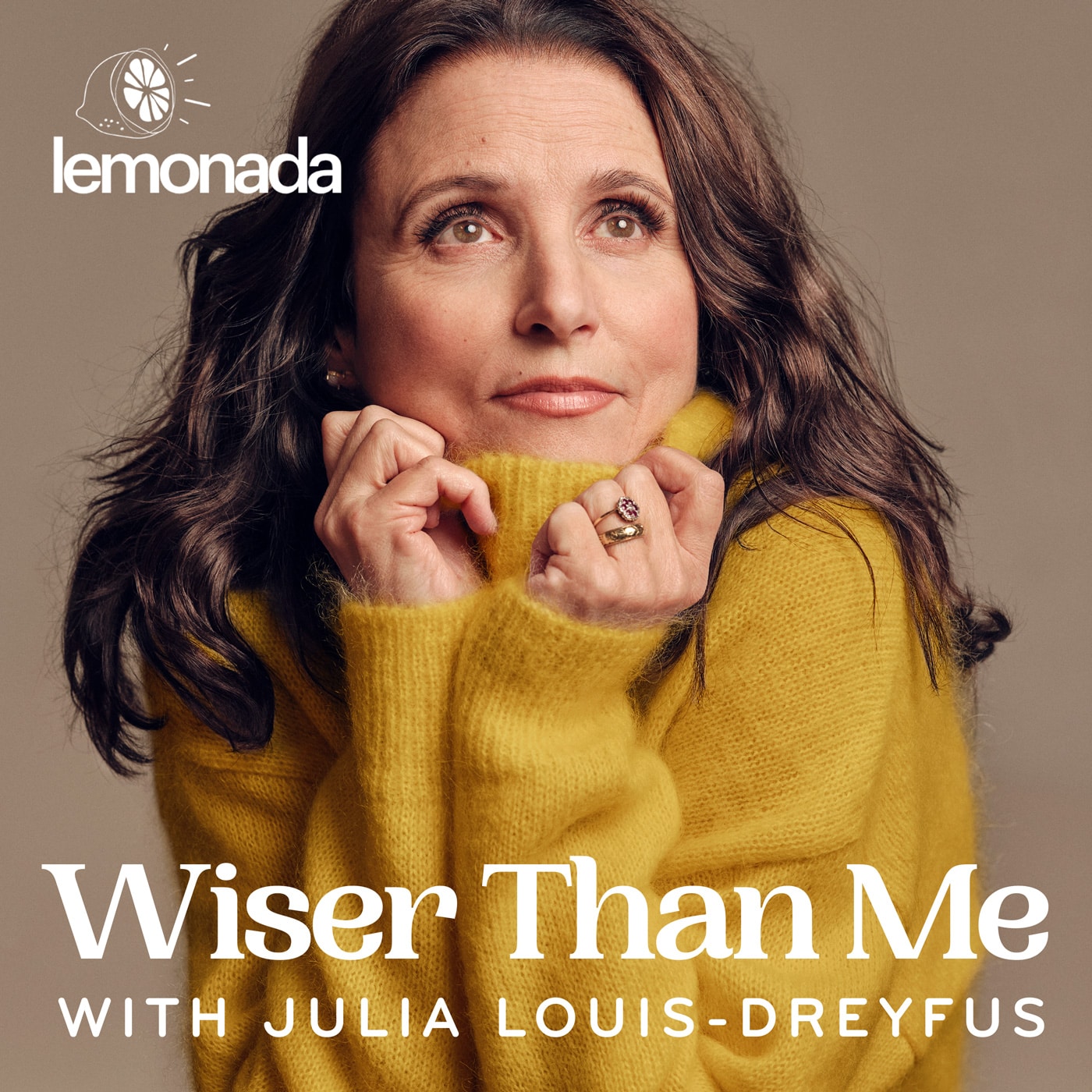
Julia Gets Wise with Annie Leibovitz
Subscribe to Lemonada Premium for Bonus Content
In this episode of Wiser Than Me, Julia sits down with visionary 76-year-old photographer Annie Leibovitz for a conversation about ambition, aging and the strange magic of being truly seen: both on camera, and in life. They dig into Annie’s relentless eye for detail and how motherhood rewired her creative instincts. Plus Julia speaks with her 91-year-old mom, Judy, about family photos and why smiling for the camera is harder than it looks.
Follow Wiser Than Me on Instagram and TikTok @wiserthanme and on Facebook at facebook.com/wiserthanmepodcast. Find us on Substack at wiserthanme.substack.com.
Keep up with Annie Leibovitz @annieleibovitz on Instagram.
Find out more about other shows on our network at @lemonadamedia on all social platforms.
Joining Lemonada Premium is a great way to support our show and get bonus content. Subscribe today by hitting ‘Subscribe’ on Apple Podcasts or lemonadapremium.com for any other app.
Transcript
SPEAKERS:
Julia Louis-Dreyfus, Annie Leibovitz, Mommy
[00:00:00] JULIA: As I’ve mentioned on this here podcast, we lost our home of 31 years and everything in it in the Pacific Palisades Fire earlier this year. And, uh, if you listen to the last episode of Wiser Than Me in that episode, I warned that I might be talking to you, dearest listener about that fire and the loss that came with it a lot this season.
And, um. Well, I’m a woman of my word, so here you go. We had a rough plan of evacuation from that house. The most important thing to get out was our photos, and unfortunately we didn’t get a chance to put that plan into effect, and all the photos were lost. And I have to say, we had more than just a few photos.
In fact, um, we had Lord help us more than 90. Big photo albums that were perfectly sorted and identified and organized by me. Every picture ever taken of our kids. And also crazy important stuff like our parents’ baby pictures, and the only pictures that existed of my parents’ wedding, and a photo of my father-in-law playing high school football in a leather helmet.
In 1927 and many, many, just thousands more like tens of thousands more, we were the repository of the family record. And it is definitely obsessive, but a. God, it was so joyful. It was so perfect. These photos gave me an enormous amount of joy, and there was one in particular that was just so good. It was this gorgeous photo that could have been a Norman Rockwell painting of our son Charlie, at about five in his first baseball uniform, sitting on his dad’s knee hugging a huge baseball glove like a doll baby.
And his dad, my Brad, who was Charlie’s first baseball coach, was in the exact same Texas Rangers uniform hugging tiny Charlie. You just can’t imagine the shit eating grins on their faces. It was just heaven. Another was a photo that Brad took of our son Henry, sitting on my father’s lap on the eel San Luis in Paris.
My father’s beloved hometown with an ice cream cone in his chocolate covered 4-year-old hand and more chocolate, dripping down his smiling chin. And my dad is looking at Henry and Henry’s looking right into the lens. So pleased with himself. Beautiful. Really beautiful. Why? Why? Why are these losses so poignant?
What is it about a photograph? It feels like the memory’s taken away. To tell you the truth, Diane Arbus said A photograph is a secret about a secret. The more it tells you, the less you know. I think that’s very profound. I’m not sure how it applies to what I’ve just told you, but I’ll tell you one thing.
I would give almost anything to have those images back really, honestly. But here’s a happy ending too. This sad tale. Uh, first of all, we have so much family and so many friends who know of this loss, and they’ve been sending us a ton of fantastic family photos, which is very touching and incredibly generous.
And second, one of my very favorite photos. Thought was lost, was out of the house when it burned up. So I still have it, and it’s just a black and white passport photo of me and my mom. Back in the day, I guess kids got passport photos with their parents, and I have to tell you, this is a marvelous photo.
My mom is young. She’s 27 actually. She’s very beautiful. She’s holding me. I’m. Roughly four or five months old. My arm is around her neck and my mother has this kind of pleased smile, and I am looking right into the camera, kind of like Henry is looking into that camera, in that photo. From Paris that I was describing.
It’s just a passport picture. It was probably taken at a drugstore or something, but I swear to God it could be a re Cartier breast song portrait. I’ve had that photo for decades. I’ve always loved it, but now, oh man, stone cold treasure. How we look at a photo can and often does change for sure, but the photo cannot.
It is that one 250th of a second or one 60th of a second or whatever that shutter speed is, that sliver of a second and instant. So potently preserved in the frame and a great photo. Whether it’s a family photo or a still life, or a photo of a movie star, whatever it is, it may be just that fraction of a second captured, but somehow it can capture us, the viewer, over and over and over again.
So how thrilled I am then that our guest today is Annie Leibovitz.
I’m Julia Louis-Dreyfus, and this is Wiser than Me, the podcast where I get schooled by women who are wiser than me.
I love pictures, photographs. I can’t get enough of the great fashion news and culture photographers of the last century. Richard a Robert, Frank, Vivian Mayer, they all. So vividly evoke what is now a distant era, an era that I can’t quite touch, but I love to look at.
That’s what great photography was. Then along came Annie Leitz and there was a seismic shift suddenly. Rock stars were draped across motel beds. A new John Lennon Cradled, Yoko Ono, Whoopi Goldberg submerged in a bath of milk, and it wasn’t just celebrities either. She shot officials rolling up Nixon’s red carpet as he flew away in shame.
After resigning the presidency of the United States, she wasn’t photographing her subjects, okay? She was helping to define entire decades and careers, and she’s still doing it. Her images are intimate. And elaborate. Packed with intriguing narrative, often funny, ironic, touching, and always daring. Annie Leibovitz blurs the lines between photojournalism and fine art portraiture.
If you’re under 50 and you’ve ever seen a photo of a celebrity that stopped you in your tracks, chances are. It’s an Annie Leibovitz. Now she’s released Women two. A follow up to her groundbreaking 1999 book, women, which featured a Forward by her late partner of 16 years, Susan Sontag, that began a photograph is not an opinion or is it?
26 years later in Women two. Annie is still answering that question. She was the first woman ever to have a solo exhibition at the National Portrait Gallery in Washington DC and in 2016 she was inducted into the International Photography Hall of Fame. Safe to say. Annie is the most sought after photographer in the world.
Please welcome photographer, storyteller and witness to half a century of art, music, and history. A mother and a woman who is so much wiser than me. Annie Ovitz. Hi, Annie Ovitz. No, I, I, I don’t, I doubt that, so, no, I, I don’t doubt that I’ve had the great joy of looking and really doing a deep dive into your work as if I didn’t know it already, but really doing a deep dive and.
Holy crap. What an ure.
[00:08:38] ANNIE: Do you know what I, I, it’s, it’s strange to me. I haven’t photographed you.
[00:08:41] JULIA: Yeah.
[00:08:42] ANNIE: With all our crossing lines. I wanted to tell you right off that we need to, um, do something. Oh, we should really think about it before we, we all go away, so,
[00:08:52] JULIA: oh my God. I would love that. I would love that.
[00:08:55] ANNIE: You’re, you’re such a, a really good actor besides, you know, everything you’ve done, so,
[00:09:01] JULIA: um, oh, thanks. Wow. So first of all, before we begin, um, are you, uh, comfortable if I ask your real age, Annie?
[00:09:10] ANNIE: Yeah, sure. How old are you? I’m 76 years old. Okay.
[00:09:15] JULIA: How old do you feel?
[00:09:16] ANNIE: I feel if you ask my daughter sometimes I’m seven and sometimes I’m 12.
Most of the time I think I feel more like 35 or 40. Yeah, probably. Yeah. Yeah. What do you
[00:09:28] JULIA: think the best part is about being your age? What’d you say?
[00:09:31] ANNIE: Um, I just love getting older. I, you just kind of know what you’re doing.
[00:09:35] JULIA: Yeah.
[00:09:36] ANNIE: It doesn’t mean it’s what you’re doing is good or, or better or whatever. It’s still hard work, but, uh, you kind of know what you’re doing and it’s, there’s something really nice about that.
And then, um. Things I think naturally are slowing down and I kind of, after running around like crazy, starting when I was very young. Mm-hmm. And so it’s nice to kind of slow down a little bit. It’s kind of great.
[00:09:57] JULIA: Yeah.
[00:09:58] ANNIE: It’s, I mean, and do things a little bit more method, not methodically, but slower. I mean, it’s great.
[00:10:03] JULIA: What do you mean? Do you mean physically slower or do you mean physically?
[00:10:06] ANNIE: And, um, it couldn’t be mentally too, too. You seem sharp. No, I’m like, I’m, I’m okay. I’m okay. I do, I do love to move. I do love to move is for sure.
[00:10:17] JULIA: Um, you know, b, back in the day. I don’t know if you remember this or not. I’m sure you do not.
But, uh, you took a photograph of Michael Richards and it was a photo of him in profile with, uh, shaving cream in his hair, and it was sort of this kind of organized looking chaos, which was so incredible. I was really. Moved by it. And I wrote to you and I asked you, would you be so kind as to give me a copy?
And you very generously sent me a signed copy of it, which I have to this day. And that photo for me anyway, really tapped into him. And, um. When you’re working, I was wondering with people in comedy, do you try to stay sort of in their brand? I have such
[00:11:01] ANNIE: God profound respect and admiration, uh, for, for comedians.
I mean, I, I, I mean all along through my work, they’re the life flow that goes through. They’re so smart, they’re so intelligent, they’re so manic depressive, you know? Yeah. You know, they’re, um, really, they’re nuts, uh, under the radar. Seems like no one really understands how brilliant our comedians are. Mm.
And I don’t know about you, I’m sure you know, but the last, you know, couple years, I mean, they’ve sort of helped me survive. Yeah. With what comes across on Saturday Night Live. I would run to the set to watch the show just to sort of get through everything. So, I mean, listen, I start off with, uh. Oh my God.
Richard Pryor, Lily Tomlin, you know, I mean, yes. I was like hung out with, with Richard Pryor or got, you know, lost several days with Richard Pryor, you know? Oh Lord. Oh lord. I know how hard it is to be funny in a photograph. It is hard.
[00:11:59] JULIA: Yeah.
[00:12:00] ANNIE: And um, you know, you have to go back to Charlie Chaplin. Just hanging from the clock or being very physical.
[00:12:07] JULIA: Mm-hmm.
[00:12:07] ANNIE: So I admire that imagery as well to try to sort of think of how to be funny without being stupid.
[00:12:13] JULIA: Without being stupid. Yeah. It’s kind of a fine line.
[00:12:16] ANNIE: I just think about Meryl Streep and, and, and the white face. Yes, of course. Like playing a role is really comfortable. Almost any actor or or comedian, quite honestly.
Yeah,
[00:12:26] JULIA: totally. Of course. I mean, well. I’d love to ask you about, uh, the portrait that you took of your mother. Mm-hmm. It’s black and white and she’s looking right at you. Yeah. Uh, just really. Without affect. And the lighting is incredible. It’s just really an extraordinary picture. And I remember reading that your mom said that she didn’t wanna look old in this photo.
Mm-hmm. So I’m wondering, do you approach photographing older women differently than photographing younger women? Or do you, do you consider age at all when you’re, is this a stupid question? I don’t know.
[00:13:09] ANNIE: No, it’s not a stupid question, but especially as I get older, I, I. I mean, it, it sounds so corny, but I do find the beauty in every one, every one of us, and mm-hmm.
Um, you know, I, I mean, when I think about the Louise Bourgeois picture, or Shane Goodall or, you know, my mother, um. Was a whole other set of complicated issues because yes, growing up with my mom, who’s hard act to follow, a very creative dancer, but never got a chance to really fulfill all, all of that, um mm-hmm.
She grew up where she smiled very picture, and then every picture when, when she took family picture, she wanted us all to smile. So I began to distrust the smile. I didn’t believe in the smile.
[00:13:51] JULIA: Ah.
[00:13:52] ANNIE: And she actually, the photograph you’re talking about, she sat for it. And she was very nervous. And, and it actually, I mean, I actually was, I was crying behind the camera because it’s not that I didn’t want her to be, I didn’t want her to be nervous, but she was nervous about looking older.
Mm. And she was in her middle seventies, probably my age. And, um, you know, she didn’t wanna look old.
[00:14:16] JULIA: Hmm. What made you cry?
[00:14:18] ANNIE: Well, because she was so vulnerable.
[00:14:22] JULIA: Yeah.
[00:14:22] ANNIE: I took that photograph. And, you know, I’ve told the story many times, but she didn’t like it. My father didn’t like it because he said she wasn’t smiling, but, um, she grew to like it, you know, it was just nice.
I mean, it, we had a big show with the Corcoran and we blew that picture up really big, and she was standing next to it signing, you know, like autographs. She
[00:14:45] JULIA: found her way back to it. She found
[00:14:46] ANNIE: her way. She, she started to like it, but it actually is such, I still. I learn from that photograph now because it took me a while.
I mean, someone said to me, you, you know, your mother is really looking at you like she loves you.
[00:15:02] JULIA: Oh.
[00:15:02] ANNIE: And I was like, no, no, but what what is remarkable about the photograph and, and we, this is where the bar is raised, is that she really is looking as if there’s no camera there. Yeah. I mean, she’s just looking at me, Uhhuh.
I mean, there’s no camera there and that is. I think as a photographer, especially if, if you’re going to be interested in portraiture, you don’t, you don’t wanna notice the camera, you don’t want to think that there’s something there.
[00:15:29] JULIA: Yeah.
[00:15:30] ANNIE: Uh, you, you want that to, to go away, right? So some photographs. With time, they certainly do change and they, they, they have other aspects to them.
Yeah.
[00:15:39] JULIA: Right. And I’m, I’m would imagine that that photograph has new meaning now.
[00:15:45] ANNIE: Well, it stays, I think what I find remarkable is it stays constant. I mean, it, it’s, I mean it’s, I mean, I didn’t get it at first. A lot of times I don’t get it at first You didn’t get what, I mean, I didn’t get, I didn’t get how good it was, I guess, on some level of, of my mother.
I mean, I, I was really happy. That it showed her intelligence.
[00:16:06] JULIA: Mm-hmm.
[00:16:07] ANNIE: And she was a really intelligent woman.
[00:16:09] JULIA: Mm-hmm.
[00:16:10] ANNIE: And she never broadcast that. Mm. You know, that wasn’t something, she was always creative life at the party, blah, blah. You know, and I think that has a lot to do with the time and, and the period for women.
[00:16:21] JULIA: Mm-hmm.
[00:16:23] ANNIE: It’s hard. I think it’s hard to have your picture taken. Yeah, it is hard. I have tremendous empathy. However, a lot of it is, is in the subject’s lap. I mean, it just has a, has a lot to do with what they can bring to this session.
[00:16:36] JULIA: Are you comfortable having your photo taken? I.
[00:16:39] ANNIE: I can’t stand it. Yeah, no, you can’t stand it.
No, not that I can, you know what it is? I, it’s, it’s what I do. Um, I’ve sort of given up, uh, on that because, no, seriously, because there’s so many different ways you can take a picture, number one and number two, if it’s someone that you think is a good photographer and there are few and far between. On some level Mm.
Might trust what, what might happen regardless of how it sort of looks.
[00:17:04] JULIA: Yeah.
[00:17:04] ANNIE: Um, but I’m sort of like, you know, I gave up and I kind of like said, okay, just, you know, take my picture out here. It’s like, it is, it’s not like, ’cause they can’t, um, very few people can really put the time in it to do it in a way that.
That they know what they’re doing.
[00:17:20] JULIA: But what about if you take a picture of yourself, Annie? Like, does that, yeah, I mean, I’m curious about that. ’cause I wonder if the image that you, that you get, it matches the image that you have of yourself.
[00:17:33] ANNIE: Sometimes I think I make myself a little better looking than a, than no, a little better.
I mean, or, or kind of a, a better version of, you know, of, of, of how, it’s so weird. But have you, um, when you look at yourself in the mirror, is the. It’s the opposite of what you’re actually get, what other people are looking at, you know? I know. Isn’t that It’s backwards. That weird. It’s backwards. It’s, it’s so weird.
And then, you know, like, you know, it was so, so funny. ’cause you know, I, I, first of all, I love photography and I admire photography and I like, um, I’ve studied not, not. You know, not on purpose so much, but, but I, I’ve just looked at every single photo book that’s ever kind of existed in every photographer and, and really learned and grew up with amazing photographers.
Like yeah, looking at Avedon and Irving Penn and Helmut Newton and Guy Geber, Dan. And, um, you know, so it’s, it’s funny when you, and, and even even Diane Arbis, when you think about, you know, Diane Arbis and then you, you sort of notice. It’s so interesting with a camera phone now because people are beginning to sort of see other.
Parts of themselves, but like when you see someone who knows, they don’t, they never see the back of their head. You know? You know? Have you met people where you realize that, uh, because there’s Yeah, I know. I’m probably one of those people that hasn’t seen the back of my head.
[00:18:55] JULIA: Well, the back of your head may look like my, it’s funny you say that big because where, what’s the
[00:18:58] ANNIE: back look like compared to, you know, the front end?
Some people don’t take care of the back of their head. They say they’re moving. No, it looks like they got outta bed.
[00:19:04] JULIA: I know
[00:19:05] ANNIE: from
[00:19:06] JULIA: part it’s three quarters all the time. Totally. You know, um, I have to say that if I’m having my picture taken, which I have a real. Frankly love, hate relationship with ’cause as to your point about trust, well it,
[00:19:19] ANNIE: it has a lot to do about whether you like yourself or like the way you look.
You know, I think
[00:19:24] JULIA: it does, but also you gotta really trust the person you’re with. ’cause it’s a really, in my view, it’s a very intimate process if it’s going well. And so you’re giving over. To somebody who has the control, which always kind of scares me a little bit. But, um, I love, I love
[00:19:40] ANNIE: seeing you like this, by the way.
Like what? Right now? I don’t know what it is, it’s just No, no. Um, well get your camera. No, I wouldn’t, it wouldn’t work coming through this. No, I’m totally kidding. Machine. But No, no, no. I’m just, it, you know, it definitely would. It feeds into, you know, how, you know how I think you’re always probably more a little more refined when you go into your, into your photograph.
I, I don’t know what I’m saying. Don’t really,
[00:20:05] JULIA: yeah. I’ve got hair and makeup, you know, for, for starters. Yeah. There’s that. Yeah,
[00:20:09] ANNIE: that’s true. That’s true.
[00:20:10] JULIA: Yeah. And obviously, I mean, I don’t have any hair and makeup today for our conversation, except I do have a little lipstick. But
[00:20:16] ANNIE: anyway, you have, you have really great skin.
Oh,
[00:20:19] JULIA: thanks. But, um, uh. I will say that the amazing photo that you took of Demi Moore, of course the iconic one, when she was pregnant with her second kid, and that was like, you know, everybody was to coin a phrase gobsmacked by it. And I wanted to tell you something about that photo that was really important to me.
So I’d had my first child the year before, and I was not somebody who was comfortable in. My own body when I was pregnant. I would just, I felt enormous. I was enormous frankly, and, and I never felt beautiful. And then I saw that cover and I thought, oh wow, that is a beautiful body, a pregnant woman’s body.
Mm.
[00:21:11] ANNIE: You know, I do want to point out with Demi Moore Sure. That, because again, we didn’t really know. A hundred percent what we were doing. And it didn’t think it was publishable Exactly. Um, at the time. And it did get taken off the newsstands in the south. Um, oh it did? I didn’t know this. Oh. Oh yeah. Oh. Oh no.
These magazines take chances when they do things like that.
[00:21:32] JULIA: Wow. You framed it differently for me, and I just wanted to thank you for that. ’cause it really was a, um, that opened up my mind in a way that it hadn’t been. So, thanks.
[00:21:45] ANNIE: I mean, I’m just looking, I mean, I have this, um. I’m just learning how to talk about the women’s book, but, but in Gloria’s essay, she and I, and I, and I pulled this out ’cause I think it is so important, how we are seeing changes, how we see ourselves.
[00:22:01] JULIA: Hmm.
[00:22:03] ANNIE: Now what that means mm-hmm. Is it’s important to, when you saw Demi Moore, you saw how you could see yourself. I think like we need these photographs and these stories of women to inspire us. And no
[00:22:15] JULIA: question.
[00:22:16] ANNIE: Only because we’re in a kind of terrible moment in, in this country.
[00:22:20] JULIA: Yes, we are.
[00:22:20] ANNIE: And, and for women, particularly since Roe versus Wade was over overturned.
Um, but, um, and then. Being awkward, being an awkward young person, you know, having the camera and giving, giving me a license to. Be somewhere. And it’s interesting to understand, I mean, and, and, and this again is in Gloria’s essay, but can I read this thing from um,
[00:22:48] JULIA: yes. You’re talking about Gloria Steinem’s essay that opens your new book, women too?
[00:22:54] ANNIE: Yeah. Okay. I didn’t grow up in a world in which women are viewed as powerful as men. Gloria says, I know many people now feel our country is going backwards, but when you have lived a long life, which. I am lucky to have done. You have a context of compared to what being condescended to is progress.
Previously we were just ignored. I remember a time she says when thoughtful male journalists would look at a room full of women and say, there’s no one here. So one of the reasons I pulled this out is this really. Uh, is what was happening when I was young is I would be in rooms and no one took me seriously.
No one thought you could do anything. And I actually used that and loved it. And it was kind of like frustrating for me when I got better known and, you know, my subject would come up and start talking to me and say, no, no, no. Stay over there. You know, so I could take a photograph, right? It was something, as a photographer you could use that no one paid any attention to you, but as a woman, period, it was very strange.
For sure.
[00:24:04] JULIA: We’ll be right back with more of my conversation with Annie Ovitz after this quick break.
[ AD BREAK 1 – 24:21 ]
You’ve mentioned that you don’t really love working in a studio. You, you like to work elsewhere. Can you talk about why that is? What is it about working in a studio if, if you still think, I
[00:24:33] ANNIE: don’t think I’m a very good studio photographer. Um, great. Oh, give me a fucking break. No, no, no. I mean, listen, I had to learn how to do it, but I, I don’t, um, it’s, it doesn’t give me enough.
Or even my subject enough, you know, real life going on. I don’t know what it is. Mm-hmm. It is just, it’s so down to. The person and me, and that’s like, just too scary to me. Oh. You know, I just like, like a breeze or something going. Anything else? Yeah. Or, or, you know, rain happening or, or you know, and I, I, I love landscape, but um, yes.
And I also really, when we’re setting up. Portraits. Love to start at at someone’s, you know, home, you know, if we can, ’cause it’s, there’s a chair you sit in, you’re kind of comfortable. You can go off and change your shirt or you know, do something.
[00:25:19] JULIA: Yeah. And yeah, totally, totally. There’s something
[00:25:20] ANNIE: about it. I mean, it’s not something about it, it is, it’s just the more, more ideal, you know, um, but obviously it’s, some people are more private, but.
[00:25:29] JULIA: I know that I notice a lot of the, in, you know, all of your work, a lot of your photographs, or many, I should say, people are in bed, which I love.
[00:25:38] ANNIE: Oh, no, no, no. That’s so funny. And okay, go ahead.
[00:25:41] JULIA: Well, I love it because there’s something obviously very intimate. I think people get relaxed when they’re in bed, but I mean, like, I don’t mean in bed like necessarily posing in bed, I just mean in bed and.
Um, well, there’s a great, I love bed.
[00:25:56] ANNIE: There’s a great, there’s a great tradition to all that. Um, no, um, Peter uja, I, there’s a big, big resurgence of, of his work, but, uh, all of his portraits were people lying down in his bed. You know, they, they would come and lay down and, and actually my favorite picture of Susan Sontag is, is, is.
You know, kind of reclined in, in his bed.
[00:26:17] JULIA: Mm.
[00:26:17] ANNIE: Kind of laying down his, they’re not, they’re still clothed and everything. They’re just in, they’re just laying down. Right. But there was a period I was doing so many people in their beds that I came home from a shoot one day and Susan said, would you stop photographing people in their.
Beds. Just stop it. It’s like it’s too much. And so, you know, I started looking, I saw Brad Pitt in this like orange bed. Yes. I was just starting to look at, I guess, I guess she’s right. You know, I have too many people in beds, you know, so I, I went, I had his sort of. Stop. It was terrible. Yeah.
[00:26:49] JULIA: But I’m gonna say, I think there’s value to it.
I really do. I think there’s something I, I, I understand it and I don’t know, I, I personally dig it, so, you know,
[00:27:00] ANNIE: I remember growing up and my mom and dad would be on Sundays particularly, all the funny papers would be, you know, all the papers. Yeah. In bed. Would be in the bed. And we all, we’d all get in bed.
[00:27:09] JULIA: I know we would too. In my family, we would get in bed with my parents. It was really cozy corners. I liked it. Yeah, it was
[00:27:17] ANNIE: great. Yeah.
[00:27:18] JULIA: What, what kind of kid were you? Like, describe who you were as a child. Unformed, of course, certainly
[00:27:24] ANNIE: unformed, you know, really uninformed.
[00:27:26] JULIA: But were you driven as a child? Were you sort of drawn to art in some way?
[00:27:31] ANNIE: Well, we were brought up, all of us were brought up. I’m one of six kids. So first of all, you always felt abandoned. You were never, you know, right. Because you, one of six, like you never got any, and you were number three,
[00:27:41] JULIA: I think, is that right? Number
[00:27:42] ANNIE: three,
[00:27:42] JULIA: yeah.
[00:27:43] ANNIE: And we moved a lot. Yeah. Which I loved. And kind of, I think, um, I’ve talked about this before, but it follows through into the assignment where, you know, basically we, we would be in.
Bal in Mississippi for two years and then moved to Fort Worth, Texas or something, so. Right. You know, when things got to be, Ooh, it’s not really great here. I’m not having a great time. You knew you were gonna leave, so, so, so you didn’t have to, um
[00:28:05] JULIA: Oh,
[00:28:05] ANNIE: that’s interesting. Yeah. You could always reinvent yourself in the next town.
Uhhuh.
[00:28:10] JULIA: That’s actually really interesting. You knew you were gonna leave God, so you didn’t have like a sense when you were a kid of sort of longing to stay in one place. You were kind of, you dug the moving around. Wanted to leave. Yeah.
[00:28:22] ANNIE: Wanted to go. You wanted to leave. Who wanted to go at a certain point.
[00:28:25] JULIA: Wow.
[00:28:26] ANNIE: And so my brothers and sisters were my best friends. Um, I, I have very few childhood friends that I can say. I don’t have any, I come to think of it
[00:28:34] JULIA: really
[00:28:34] ANNIE: because we move so much and it’s always been about family. Always been about family, which is why I wanted to have children the longer run night.
[00:28:40] JULIA: Yeah.
[00:28:41] ANNIE: But wow. It was beaten into us early on that, you know, like it’s about family. It’s about family.
[00:28:46] JULIA: Well, it is ultimately, I
[00:28:47] ANNIE: think it is, and right now it really is. Yeah.
[00:28:50] JULIA: Yeah. Right now it really is.
[00:28:52] ANNIE: Yeah. Right now we really have to hold each other and our communities and our people together.
[00:28:57] JULIA: Yeah.
[00:28:58] ANNIE: Just outside of it, it’s a little strange.
[00:29:01] JULIA: So. I’m going straight in Rolling Stone. You were there at essentially the inception of Rolling Stone. Were you a music lover? No. No.
[00:29:12] ANNIE: No. Really? No, no, no. I, I, um, it’s, it’s really important. To realize that I, I went to the San Francisco Art Institute as a painting major, and then I took a night class in photography and then I became totally seduced and interested in photography in the dark room and everything.
And I was interested in photography.
[00:29:30] JULIA: Yes.
[00:29:30] ANNIE: And when I went to Rolling Stone, it was a young magazine that did more than music. They did popular culture. Right. They were, you know, they were politics a lot. And I, you know, traveled with people like Hunter Thompson and Tom Wolf and went down, you know. Space launches.
It was like, the music was like so predictable to me. You know, that work. Yes. I mean, you were sort of at the, the mercy of whatever lighting person was, you know, what drugs they were on, you know, lighting the stage. Yeah. I mean, it was like the worst. Worst. I, you know, I wasn’t interested in, um, I wasn’t a rock and roll photographer.
I was a photographer, and I applied what I had, you know, to, to that. So, I mean, I love music. You know, I, I remember when I did the Rolling Stones tour as their tour photographer in 1975. I wished I was on Bob Dylan’s Rolling Thunder tour. You know, I didn’t really love the Rolling Stones music, you know, it was like, I thought, okay, you know.
Okay. Robert Frank, you know, was on their tour, you know, a couple years before. And did you know this film called Cus Suckers Blues, which never got seen, but I said, okay, okay. You know, ’cause you know, Mick Jagger called me up and said, would you be the tour photographer? And I did it and it almost killed me.
[00:30:41] JULIA: Yeah. ‘
[00:30:42] ANNIE: cause I was so naive.
[00:30:43] JULIA: And did it kill you from the, a drug point of view and addiction and all of that, or the schedule or all of the above and never sleeping, I’m assuming all of that? Probably
[00:30:52] ANNIE: all above. I mean, it goes, you know, taking drugs goes with, you know, not going to sleep or staying up for two or three days or Right.
[00:31:00] JULIA: Yeah. But, um, yeah, it does go with that.
[00:31:02] ANNIE: That’s the equation. But I didn’t like it at all. I mean, I didn’t like that it took over, uh mm-hmm. It was so was not me, and then took me a while to not be that. Mm-hmm. So how did you not be that? Um, well, I, I try, I tried many. I was trying to see, um, therapists and people and blah, blah, blah, blah.
And then I, I eventually, I went into, um, I. A place in, in Summit, New Jersey for a month. Mm. And I just. Like that. It was over.
[00:31:35] JULIA: Oh, you mean a rehab place? Yeah.
[00:31:37] ANNIE: Yeah. It was, it was just over. It was just over, it was just done job. It was, I, I got the help I needed and it was like, I, I so encourage anyone. It’s like, because, you know, to really wanna do that, and then it’s like, it’s like they sh gave you all the tools you needed to not do it, and then you just move on.
[00:31:53] JULIA: Oh God. It’s lucky for you that it worked as well as it did. My God. ’cause a lot of people that is not the case, but good for you. That’s awesome. Can you tell the story by the way of, uh, because it’s a remarkable story and I think it speaks to your, the ballsiness of you, even if you didn’t feel it, of the first time that you’ve photographed John Lennon.
[00:32:14] ANNIE: No, I mean, I, I, you know, again, was very young. I, you know, just started working at Rolling Stone. I had heard that Jan was going to New York to interview John.
[00:32:25] JULIA: Mm-hmm.
[00:32:25] ANNIE: And I started to talk about it and said, you know, why don’t you let me go and take the picture, you know?
[00:32:30] JULIA: Yeah.
[00:32:31] ANNIE: I can stay with friends and fly youth fair for $75.
Mm-hmm. And, um, and you can own the negatives. I said, of course, that part he really liked. And, um, um, and I, and I think that’s why I got to go. Yeah. But it was such an important sitting because it set for me what would be the predecessor for all the work I did from then on. I, I, ’cause John and Yoko were so welcoming and easy.
[00:33:03] JULIA: Without affectation.
[00:33:05] ANNIE: Yeah. And they just let me roam around. And, you know, I found out later that I think like Yoko finally told me this like 20 years later or something that, that basically they were just so thrown that Jan hadn’t hired some big fancy photographer, you know, that they, they just kind of, you know, and I was like so young and then they just thought it was nice, you know, so they, they were so nice.
So.
[00:33:27] JULIA: Oh, and then you got that amazing photo, I think when you were just checking the light meter or something.
[00:33:34] JUDITH: Yeah.
[00:33:34] JULIA: And to be clear, this is a solo portrait of John, not the one that you took a decade later of John and Yoko in bed together.
[00:33:41] ANNIE: Yeah, yeah,
[00:33:42] JULIA: the solo one,
[00:33:43] ANNIE: so, so I had, at that point, I was trying to be you.
Margaret Bur White from Life Magazine and I had like, you know, I went through all those stages, you know, like I, you know, Eugene Smith from Life Magazine. Oh, I’m a photojournalist. That’s what I am. But I had, uh, three cameras. I had a camera that had a longer lens on a 1 0 5 that had a light meter in it, so I would use that as my light meter.
And it wasn’t a lens I liked. The 1 0 5 was a longer lens. And then I had another camera that had the 35, which is cardio Brazos. Robert Frank’s, you know, lens of choice, which is more closer to how the eye sees. It’s a little wider and um, it’s more environmental and
[00:34:25] JULIA: mm-hmm.
[00:34:25] ANNIE: Um, so I was literally taking a light meter reading with John at the end of the table in a room and um, and I took a couple pictures at the same time.
And then it was Jan who liked that picture and I didn’t like it ’cause it wasn’t my kind of picture, you know, I didn’t like a long lens.
[00:34:42] JULIA: Hmm.
[00:34:42] ANNIE: Picture.
[00:34:43] JULIA: Yeah. But you know what’s interesting too about that picture actually that has just occurred to me is that there’s no affect to it. It sort of reminds me of the portrait of your mom in that sense.
That’s
[00:34:53] ANNIE: right.
[00:34:53] JULIA: There’s nothing between them and the lens. It’s just truth.
[00:34:59] ANNIE: Yeah.
[00:35:00] JULIA: That’s hard to get.
[00:35:02] ANNIE: You know, I, I don’t know if it’s so hard to get as it is to realize that that’s there and, and it’s not gotten.
[00:35:09] JULIA: Oh, I see.
[00:35:10] ANNIE: You know, I, I, I think I have a little more to learn. Mm-hmm. Mm-hmm. For sure.
[00:35:16] JULIA: What have you ever made, uh, a mistake?
What, and turned it. Wait, listen. Yeah, that’s the question. Have you ever made a mistake, Annie Leitz, that’s like, that’s like you’re talking about they’re all
[00:35:30] ANNIE: mistakes
[00:35:31] JULIA: and turn, no. Like, can you cite, and maybe the lenon thing is an example of that, of making a, a mistake, a really, a bad screw up and turning it into an asset somehow with your work.
[00:35:45] ANNIE: Well, I, I mean, it’s hard to even understand that question because on some level. Things happen like that. I mean, it’s, yeah. And then you have there an, I’m thinking about the Nancy Pelosi picture where I’m, when she’s walking away, I’m spending three days with her at the Capitol and I’m trying to catch up with her and she’s in high heels and she’s, I can’t, I cannot catch up with this woman I was trying to get in front of her, you know, like, and I couldn’t do it.
And I just, you know, shot and I just, you know, went and I go back to my studio or whatever and said, oh, this is such a failure. And I looked at it and I said, oh my God, that’s Nancy Pelosi. You can, you can’t keep up with her. You know? So she’s like, you know, she’s like running, you know, those men couldn’t keep up with her.
And I, and I just loved it. I just loved it. I, I, I mean, I go into a shoot and you try to be as prepared as possible, and then you hope for something. Will happen that you didn’t expect or you want, you want something to happen that, that you don’t know about? I’m a very good editor. I’m a very good editor.
[00:36:42] JULIA: Mm-hmm.
[00:36:42] ANNIE: I mean, there’s a lot of stuff that’s on the floor, you know, that’s like you, you wanna throw away. I’m not worried about how many pictures I take, you know? ’cause I know that I’m a very good editor.
[00:36:51] JULIA: I love that story about Nancy. You know, we talked to her on this podcast. Yeah. And you know what was really remarkable is that she’s a big chocolate lover and, uh, so I gave her a box of chocolates.
Yeah. This one in particular, we did this in person and. I’ll be god damn. She didn’t start
eating those chocolates right as we were talking and, and it was actually really nice because I felt like, uh, she was loosening up. You know what I mean? And she was talking with chocolate in her mouth. It was just awesome.
Anyway, I digress. No, that’s not digress. I love that. That’s great.
Okay, it’s time for another break more with Annie Ovitz in just a moment. And by the way, we just launched a Wiser Than Me newsletter where you can get behind the scenes details from my conversation with Annie Ovitz and more. You can subscribe at Wiser than me.substack.com. You’ll get photos and videos and letters from me.
Think like exclusive bonus snippets, glimpses behind the scenes of the making of the podcast, a, a deeper dive into every guest, plus a place to connect with other wiser than me listeners, I hope you subscribe at wiser than me.substack.com and stick around to see what we have in store. Be right back.
[ AD BREAK 2 – 38:15 ]
I wanna talk about Susan and your partnership with Susan. Mm-hmm. And frankly, you know, a lot of people who listen to this thing, there’s a lot, of course, grief is a part of life and if you’ve lived to a certain age, you know mm-hmm. You’re, you are gonna have to. Walk with grief and be with it. So I wanted to talk to you about that period of time in your life when you lost your partner, Susan Sontag, and your father and you mm-hmm.
Were having all these babies all within a very short period of time.
[00:38:54] ANNIE: It was amazing. It was amazing. How
[00:38:56] JULIA: did
[00:38:57] ANNIE: you do it? You do it, you know. You know, we, we, um. When Susan died, I wasn’t even too sure I had any photographs of her.
[00:39:07] JULIA: Hmm.
[00:39:08] ANNIE: But so, so she died and I tried when she died and it, and on some level, um, you know, ’cause it went over a long period of time.
You know, when that happens, you’re, you’re, there’s a kind of a sense of relief as well, you know? Yeah. That this person can. Be over that. You know, basically they, they’re, they’re, they’re on, although she never, it was really hard as she never really wanted to die. So, you know, that was really hard. Yeah. Um, she said if I could just have five more years.
So it was like,
[00:39:34] JULIA: yeah.
[00:39:35] ANNIE: Um, but we’re all gonna, you know, we’re all certainly gonna head there. We’re all gonna
[00:39:38] JULIA: bite it at some point.
[00:39:40] ANNIE: For sure. Um, so. There was that work. And then I had all this, this, these photographs. I’ve, I’ve never stopped taking photographs of my family. I, I love my family. I think they’re in my best photographs.
Mm-hmm. And then, you know, the children came along and there was that whole period. And then Susan would get mad at me ’cause she thought I didn’t take enough pictures. She said, why are you taking more pictures? You know, it was like, um, well, she’d get mad at me about everything but. So when you see a photographer’s life, you know, I am really photographing her because she wants to be photographed towards the end of her life.
It was really her wanting that. Anyway, photographer’s life is my best book because it’s working. You see all of that and you see. The story of every man and you see the assignment work at the same time going on, you know, like Colin Powell and you know.
[00:40:34] JULIA: Yeah, I know. It’s interesting how it all bumps up against each other.
You know, it’s weird too, when you have these big events happen. I’m sure lots of people have this experience. I certainly have. Like when I had a baby the first time and my world was turned upside down the way it does for any Yeah. Mother and all of a sudden. You and your life and your ego is on the back burner because somebody else’s ego is front burner and you’re in charge.
And that’s a flip of a switch. That’s a biggie. And I remember thinking, wow. And then, you know, and I’m. Driving in the car and he’s in the car seat and life is going on just like it was. What the hell? And your book tells that story. It sounds like your work got you through that period of time.
[00:41:21] ANNIE: Totally. And I, I, I’ve said that, uh, about this, that definitely.
Um, I was really lucky to have my. Yeah. And I’ll tell you, when I, when, when I worked on it, when I worked on the edit upstate in my barn, I mean, I was so deep into it, it really was, um, my year of magical thinking, you know, uh, you know, Joan Didion, it’s, it’s really, it really is. Uh, you go a little. And you go insane.
You know, you really, you really do. Um, and I, and I worked on the edit for the book, and it was like, I remember it was over 400 pages.
[00:41:55] JULIA: Wow. And
[00:41:55] ANNIE: I took it into Andrew Wiley, my agent, you know, to look at. And he went through it and I kept waiting for someone to say, you can’t do this book. It’s 400 pages. You know, you have to edit it down to 200 or something.
Right. And no one ever said that they were, I think they were afraid to tell me, you know, to, to edit or anything. And we, we. Published it at four, over 400 pages of these pictures, and I never really. I never really thought anyone was looking at it. I mean, I never thought anyone would, would look at it. You know what I mean?
It was, it was it. It wasn’t like something I did for anyone else. I did it for myself. And so it was very strange when people started looking at it. I realized I had exposed my life. I don’t think I could ever do that again like that.
[00:42:35] JULIA: Mm.
[00:42:36] ANNIE: You know, especially now with my children. I mean, they said that to me a few years back.
They said, mom. Oh, they did? Yeah. I mean, and you have to respect that. Of course, for sure. How old are they now? Well, Sarah’s 24. And Susan and Samuel, well are 20, 19. 20. They’re 20. Yeah. Uhhuh.
[00:42:53] JULIA: I know. Wow. Right. I know. They’re pretty
[00:42:56] ANNIE: cool. They’re pretty great.
[00:42:58] JULIA: Was it hard for you when your kids took off for college and stuff?
[00:43:02] ANNIE: No. I remember the, the COVID drop off was, was tough ’cause they just said tough. Okay. Drop ’em off. And I was like, what? What? I know what, I can’t go up to their room and just straighten out. Yeah. The bed or something. Right. I just went into the, I went to a corner and cried. It was like, me too. Yeah. You know, me too.
[00:43:21] JULIA: In fact, with the, with our first son when we had both of them and we dropped our first son off and I remember really having to keep it together. ’cause I didn’t wanna lose my shit in front of my younger son who was, you know, 13 at the time. But then when we dropped off our second kid, I started crying like it, we had had a horrific death in the family.
Yeah. And my husband had to say to the taxi driver, my, my wife’s okay. It’s all right. I just let it go. Oh. I, it was, it’s a bummer. I don’t know. What’s your experience now that sort of, they’re a little bit past that moment. I mean, I know your younger ones are still studying, but Yeah. They’re
[00:43:58] ANNIE: still, um, I mean, if I’m having any issue now about being older, is that I decided to have them older and yeah, I, you know, in my.
My older daughter gets mad, mad at me if I don’t take care of myself. Mommy, I want you to, you know, live longer. You know, it’s like, you know, it’s like, you know, and you, you worry about that. But I, I believed in setting by example, by just working and then letting them see me work. Um, for sure. And, and not necessarily being so, so smothering and so close because I, I just knew.
I was an older mom and, and I knew they were gonna have to sort of deal with, with me leaving earlier than, you know, than possibly being around.
[00:44:38] JULIA: But were you always sanguine with it like that? I mean, you sound very,
[00:44:42] ANNIE: I think part of even having, um, more than one child was so they would have each other because, you know, I am very close with my siblings and uh, um.
When our parents did pass, you know, we really did close rank. You know, we really are tighter. Yeah.
[00:44:59] JULIA: Yeah. That’s beautiful. My husband’s father always used to say that his biggest accomplishment was that his own children were close. And I think that there’s something to be said for that.
[00:45:10] ANNIE: I mean, you do realize his pretty lucky what you have with your, your sibling, because a lot of families are not like that.
[00:45:15] JULIA: That’s right. Yeah.
[00:45:16] ANNIE: It’s, and more families are not like that actually.
[00:45:20] JULIA: Oh, God dammit. I don’t know if it was Margaret Mead. Somebody said, somebody said the big life challenge was to reconcile a sibling relationship, and if you can do that, you’re well on your way. Something to that effect. I don’t know if it’s Margaret Meade or not.
We could say it is. Um, doesn’t sound like Margaret Meat, do you think? No, it really doesn’t. It sounds like me bullshitting.
[00:45:43] ANNIE: That’s Jane Goodall. She’s talking about chimpanzees.
I, I do, I do love that picture. I, I, that’s, you know, funny thing finally looking at that picture of Jane Goodall and then like, realizing, oh, ’cause it was a very quick, it was a very quick shoot. And, um, and of course I wanted to be in the jungle with her or something. And then, um, where were you? No, we were like backstage somewhere.
I had like 10 minutes with her or something like that. And she hates having her picture taken. And maybe under those circumstances she hated it. And, um, you know, I, I took several pictures and then we went away from it. And then I looked at it and her face and said, oh my God. Because at a certain point she just stopped and gave me this look.
And after like, you know, hating it, hating it. And then she stopped and looked at me and I realized, oh my God, she’s looking at me. That’s why those chimpanzees really. Trust her because she was looking at, she, she was like dealing with it because everything’s in her face.
[00:46:38] JULIA: Totally. And I have to say, am I crazy?
But when I, I was looking at those pictures of her in your book and I thought, oh my God, does she look like this stunning. Chimpanzee in these photos. I’m not kidding.
[00:46:55] ANNIE: Okay, now you’re taking it too far. No, but I think it could have been the look, ’cause it that look. Yeah. I mean that’s not a look for a photograph that is like.
Like, okay, I’m gonna deal with this person who’s insane and I’m gonna like, you know, try to calm them down and I’m gonna do this.
[00:47:14] JULIA: Yeah. I mean, what an incredible woman. She, she was a powerhouse. Yeah. Uh, but wait a minute, I wanna go back to you having kids for a second. So you had your kids when you were in your fifties.
[00:47:28] ANNIE: I’m not telling, I’m not telling you. Oh, come on. You told me how old you were. No, no, no, no. I was, um, yeah, exactly. 50. Yeah,
[00:47:35] JULIA: exactly. 50 or 49, 50.
[00:47:36] ANNIE: You know, what happened was, um, I was seeing my, my, my doctor in. And I was just crying. ’cause I said, I realized it was my late forties. And I said, I can’t believe I’d let this time go by.
And, and I haven’t done this, you know, and I haven’t had children. And you know, Susan wasn’t interested in children and because she was a. A big child and, um, you know, and wasn’t interested and I would talk about it every now and then, and she was not interested and, and we didn’t, besides, we didn’t really have that kind of relationship.
You know, we had two separate apartments and she really had her, you know, but we had our own world, but we were really supported each other tremendously. But so, so he said to me, you can do it. And I said, really? And um, and I did it. Wow. Was it hard
[00:48:26] JULIA: to be pregnant at that age or not so much?
[00:48:28] ANNIE: No, not really. I was working, I was working, yeah, I was right.
Went on working. I remember going down to do Willie Nelson and I was really pregnant and there was so much pot, you know, in the, oh God, we were all stoned by my whole family and whole family. I’m sorry, my whole crew.
[00:48:43] JULIA: Yeah.
[00:48:43] ANNIE: And, um. And then we all went to, you know, what is it that salt pit afterwards to have like, you know, ribs or something.
’cause we yummy like crazy because we were stoned. We were, we had second, second, you know, what is it? Second Secondhand smoke. Secondhand smoke. And it’s, it’s just like, I love Willie Nelson. Okay.
[00:49:01] JULIA: He’s the greatest. Okay. Now let me ask you a couple quick questions. Is there something you go back and tell yourself at the age of 21?
I,
[00:49:08] ANNIE: I, I feel really lucky what I had the opportunity to do. I don’t know if I would’ve wanna be 21 again. No,
[00:49:14] JULIA: I wouldn’t either, for sure. Yeah. Forget it.
[00:49:16] ANNIE: I mean, I edited my first half of my work, 1973 to 1983. I edited that, those 10 years in, in, in depth. And I can stand outside of myself and look at that work and see that this kind of energy and verve and insanity of the way I was working and, um.
I kind of love whoever that person was, but I wouldn’t wanna be that person again.
[00:49:39] JULIA: So I’m guessing then what another question that I often ask folks is, is there something that you wish you’d said yes to? But it sounds like you said yes to everything that you wanted to say yes to. That was the problem.
[00:49:53] ANNIE: I mean, everything was just too interesting.
[00:49:55] JULIA: Yeah, right. Everything,
[00:49:56] ANNIE: every single thing was interesting. I was just interested in everything. What are you looking forward to? I just am so lucky that I love what I do and I, I, I, I, I think it’s the key. It’s what you hope for your children as they find something they love to do. Please, Christ, ’cause it, it’s just really.
It makes it all just so incredible.
[00:50:22] JULIA: Oh, it truly does. There’s nothing more rewarding than that for real. So, Annie, one final question. Is there anything you want me to know about aging?
[00:50:38] ANNIE: I think we started at the very beginning just to say that I’m really. Enjoying it. You know, I mean, I’m enjoying kind of knowing what I’m doing except for this sort of stuff.
Podcast stuff. I dunno.
[00:50:51] JULIA: You did good. You did good.
[00:50:52] ANNIE: No, no, I’m, no, you did. I mean, know, here’s
[00:50:56] JULIA: what I like. No, because we had a conversation, which I appreciate.
[00:50:58] JULIA: Yeah.
[00:50:59] JULIA: You know, I like when we go off and we go somewhere else and I mean, I’m enjoying it. Fuck it. What choice do we have? And let’s go. And there’s a lot to do still.
[00:51:09] ANNIE: One step at a time here. You know,
[00:51:11] JULIA: one step at a time. And I really admire you and I am very grateful. I am. I really do admire you an enormous amount. I really do. I always have. So thanks for taking the time today.
[00:51:23] ANNIE: Thank you, Julia. Thank you.
[00:51:30] JULIA: Well, Annie Leibovitz. Is an extraordinary human being. There’s no doubt about it. I know my mom thinks so too, so I can’t wait to hear what she has to say about my conversation with Andy. Let’s get her on the Zoom.
Hi mommy.
[00:51:47] JUDITH: Hi Lovie. How are you doing? I’m doing fine. Doing fine. How are you doing?
[00:51:52] JULIA: I’m exhausted and very happy. I just had a really nice conversation with Annie Vez. Oh,
[00:51:59] JUDITH: what a figure. Right? Totally. But the other thing was incredible about Annie was having a baby when she was 52.
[00:52:07] JULIA: She had a baby when she, her first baby, when she was 50, and then she had, uh, twins four years later.
She had those, the twins by a surrogate. But these are her babies and who are now in their, uh, early twenties. Isn’t that incredible?
[00:52:22] JUDITH: Incredible. Now where she got the. Strength and the confidence to do that in her fifties. I, yeah, I can remember reading about that at the time and thinking how possibly what she had to do to her body and what she had to go through was incredible.
And she must have had a drive that was. Enormous to do that.
[00:52:45] JULIA: Yeah, I know. I admire her for it. Mm-hmm. So here is something else that she said, which I thought was really interesting to think about. She says her mother always wanted them to smile in photos. ’cause they took a lot of family photos. She’s one of six kids and she has learned to never trust a smile.
It says, Annie,
[00:53:08] JUDITH: actually, you look at family pictures and they all have these smiles pasted. We all have our smiles pasted on our face.
[00:53:16] JULIA: Yeah, and it’s funny because you and I both have really big smiles. We have, you know, I inherited this big jaw from you, right? This big, this big mouth, and. I’m very used to smiling for photos and people, even photographers have always said, you know, they want me to smile.
Sometimes it’s like, less smile. Actually, one time I was, I was having my photo taken at the DMV and the lady, I, they took it and then she looked at me and she goes, okay, let’s do one more, a little less smile.
And you know what else this reminds me of? Mom, do you remember that story about Henry when you were trying to take his picture? You came when, uh, Charlie, our second son was born. Mm-hmm. Will you tell what Henry said to you? You were trying to take his picture? Yeah,
[00:54:11] JUDITH: and he, he was with Charlie and Uhhuh, so I said to him, uh, I, I don’t remember if I said smile, but I said, look happy.
And so he said. Uh, granny, I haven’t been happy one single day since Charlie was born. Now, by the way, I’d like to say the, the two boys are now like, no, I know they’re joined at the hip. I want that to for sure that Charlie knows that he was so welcome in the world. But no, of course. No bad. No, no. It was, yeah.
But the
[00:54:42] JULIA: thing is, it was an honest child reaction. Yeah. To the moment. And, uh, to your point, you know, there. Thick as thieves,
[00:54:51] JUDITH: those two, and I, I remember that somebody said to me one time, if you can survive a sibling, you can survive anything in life.
[00:55:00] JULIA: Well now who said that? Because I mentioned this to Annie Ovitz and I thought maybe it was Margaret Mead, but it wasn’t.
Who was it?
[00:55:07] JUDITH: I have no idea. Maybe you’ve heard me say it before.
[00:55:10] JULIA: Yes. Then you were the one I was quoting. But you
[00:55:13] JUDITH: don’t know who you were quoting? No, I don’t know who I was quoting.
[00:55:15] JULIA: Hmm.
[00:55:16] JUDITH: I’m sure I didn’t make it up.
[00:55:17] JULIA: Yeah. Okay, so I got news for you. It is Margaret Mead. Okay. Listen to this. Sister is probably the most competitive relationship within the family, but once the sisters are grown, it becomes the strongest relationship.
Hmm. I would, uh, replace the word sister with sibling. Mm-hmm. Well, anyway, that sort of dances around the idea, I guess. Mm-hmm. Right, right, right.
[00:55:46] JUDITH: You know, sharing a parent’s love is, is like threatening beyond measure. And that’s what happens with a sibling. You have to share the the love. And that’s especially if you’re the, you know, the king or the queen and you’re used to having it all to yourself and then all of a sudden wha Right.
This little wee wee.
[00:56:09] JULIA: Yeah, I know. I mean, it is such a hard transition to make, but then once that transition is made, you know. You’re the better for it. The siblings are, um, like I said, they’re just joined at the hip. All right, mom. Mm-hmm.
[00:56:28] JUDITH: I’m, I’m happy I got to chat with you once again. Same for me. I’m always happy to chat with you.
Uh, the more the merrier. Okay.
[00:56:37] JULIA: Love you, mom. Have a fabulous day. You too. Love you. Bye. Love you. Bye.
There’s more wiser than me with lemon A premium. You can now listen to every episode ad free plus subscribers. Also, get access to exclusive bonus interview excerpts from each guest. Just tap. That subscribe button on Apple Podcasts, head to lemon@premium.com. To subscribe on any other app or listen, add free on Amazon Music with your Prime membership.
That’s lemonda premium.com. Make sure you’re following wiser than me on social media. We’re on Instagram and TikTok at Wiser Than Me and we’re on face. Book at Wiser Than Me Podcast. We’re also on Substack at Wiser than me.substack.com. Wiser Than Me is a production of Lemon Media created and hosted by me, Julia Louis Dreyfus.
The show is produced by Chrissy Pease and Oja Lopez. Brad Hall is a consulting producer. Rachel Neil is consulting senior editor and our SVP of Weekly Content and Production is Steve Nelson. Executive producers are Paula Kaplan. Stephanie Whittles Wax, Jessica Cordova Kramer, and me. The show is mixed by Johnny Vince Evans with engineering help from James Barber, and our music was written by Henry Hall, who you can also find on Spotify or wherever you listen to your music.
Special thanks to Will Schlagel and of course my mother, Judith Bowles. Follow wiser than me wherever you get your podcasts and if there’s an old lady in your life, listen up.
Yeah.

